
Three hundred dollars for one tooth.
That is the floor, and Valentina Zuluaga says it plainly because the number is the whole argument.
"A single custom gold tooth can cost $300 or more. That's not cheap. You're investing in personalized jewelry made specifically for you, something you can potentially keep for the rest of your life. Why shouldn't the experience match that?"
Why shouldn't the experience match that. Everything she has built is the answer to that one question, and nobody in the trade was asking it.
She Started Somewhere Less Luxurious
She did not begin with a thesis about where grillz belong. She began with a mall.
"When I first started doing grillz, I had no idea how big this business would become," she says. "I started in a much less luxurious mall environment, and people just kept coming back."
That is the part that decided it. They came back, and they brought people.
"Clients were returning and referring their friends, and it grew to the point where I wanted to elevate the experience."
She is direct about the taste underneath the decision, and she does not pretend it is strategy.
"I've always loved luxury. That's just who I am."
Then she explains it with a comparison nobody in fine jewelry would reach for.
"I compare it to Planet Fitness versus Life Time. You're going to the gym either way, but the environment, amenities, and experience are different. I wanted to bring that same thinking to grillz."
Same service, different room. She moved AVM Gems into Scottsdale Fashion Square, and the private space was the point rather than the address.
"Scottsdale Fashion Square gave me a private space where clients could feel comfortable, explore designs, ask questions, and enjoy the process."
The privacy stopped being a nicety as the clientele changed. "As more celebrities and public figures started coming in, privacy became even more important."
Ask what it took to get the lease and the answer has nothing in it about charm.
"Tenure in business and a proven track record. I could show them the years I'd put in, my social media presence, our growth, and the support of my clients. There was something tangible for them to see."
She has done it again since. Beverly Hills is open, and she calls it her newest location.
The sequence is the whole argument in three addresses. A mall nobody would call luxurious. Then Scottsdale Fashion Square, won on tenure rather than charm. Then Beverly Hills.
The Line She Will Not Let Anyone Draw
The quiet assumption inside her whole business is that a luxury mall and a street-born craft do not belong to each other.
She rejects the premise without raising her voice about it.
"My clients include nurses, firefighters, high school counselors, entrepreneurs, and people from all walks of life. It's a way to express yourself."
And then the sentence that is the thesis of the entire operation.
"This craft has roots in street culture and hip-hop, and I respect that. But just because something was born in the streets doesn't mean it has to stay there. It can evolve into luxury spaces without losing where it came from."
Not a defence of the craft and not an apology for the mall. A refusal to accept that one disqualifies the other.
"I've never seen grillz as less than fine jewelry, or as something for only one type of person."
What She Refused to Keep Doing
The thing she noticed first was not a gap in the product. It was a feeling in the room.
"One of the biggest things I noticed, both from my own experience and from what clients told me, was how transactional getting grillz could feel. It was sometimes, what do you want, followed by finishing the sale and moving on. There wasn't always much guidance or room to explore."
So she built the opposite, and she is specific about what she brought to it.
"As a woman in a male-dominated industry, I bring my own perspective. I'm creative, I'm a listener, and I enjoy helping someone figure out what they want, especially when it's their first piece and they don't know where to start."
The work, in her telling, is mostly the part before anything is made. Exploring materials together. Not being rushed. Trust, in a transaction where somebody is handing you their mouth.
Then there is the refusal that costs money.
"I refused to become comfortable doing things the same way just because they were profitable. I saw businesses using the same techniques in the same environments for years without much investment in improving the client experience. I kept thinking, why aren't we doing more?"
She answered her own question by buying a 3D dental scanner.
"A 3D scanner isn't cheap. Neither are the software and the technology that go with it. But I wanted to make that investment because I could see what it would mean for my clients and my work."
And the reason is more specific than precision for its own sake.
"Some people have veneers, missing teeth, or other characteristics that need extra consideration. Digital scanning gives me more information to work with when approaching those designs."
The people the old process served worst are the ones the new technology serves best.
"I don't believe a business should stop evolving just because it's making money. The people supporting it should benefit from that growth, too."
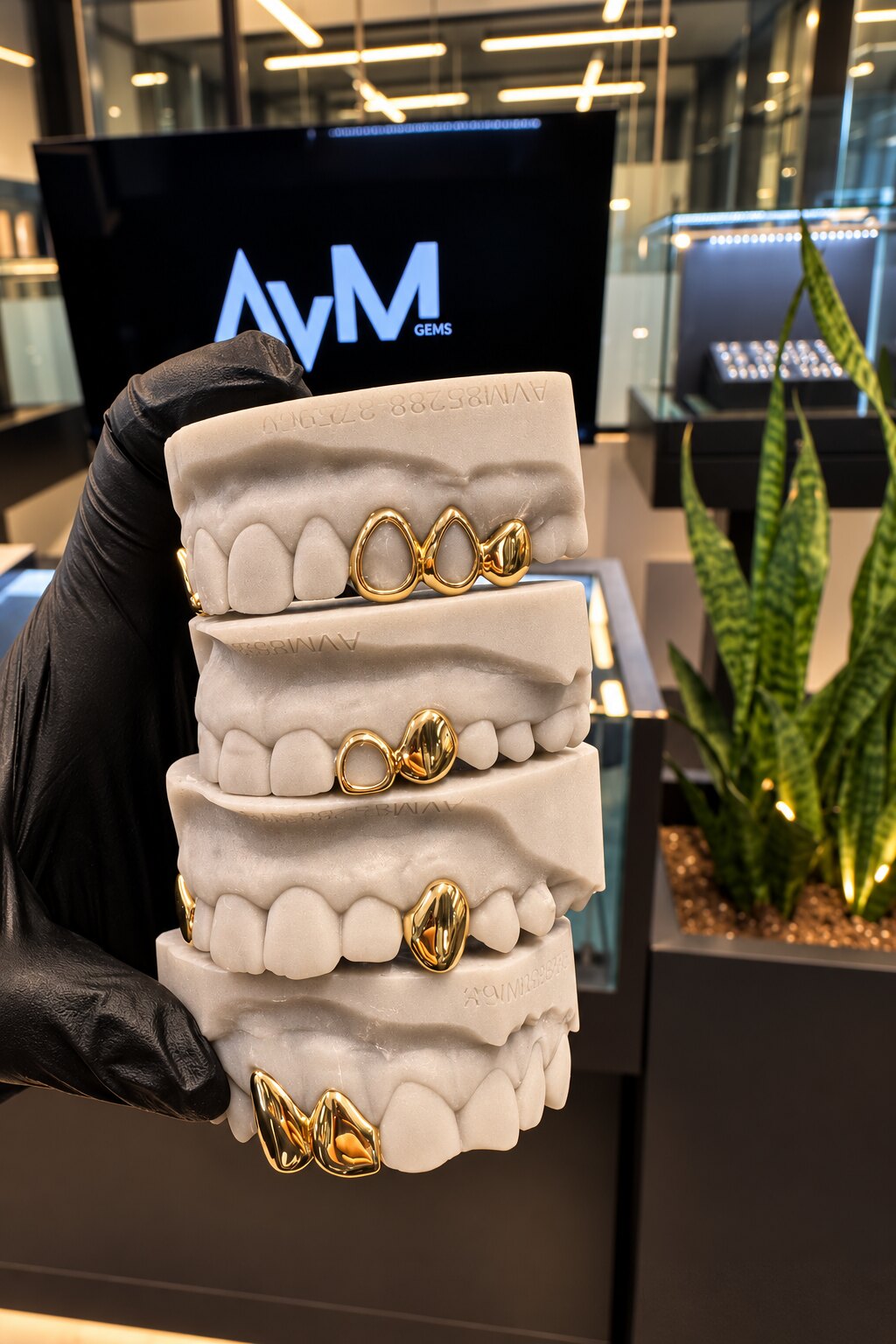
Her Hands, and What Leaves Them
Asked exactly which steps are hers, she gives the answer founders usually dodge.
"Honestly, if I could do every single step myself, I would. I'm passionate about all of it, and learning to delegate has been one of the hardest parts of building this company."
She does not soften how hard it has been.
"Even handing off impressions to an employee can make me uneasy because the fit and quality matter so much to me."
"Someone is trusting us with their smile, and I take that seriously."
What she keeps is the front of the process. Impressions and design, the part where a person's idea becomes a thing that can be built. Casting, stone setting and finishing go to experienced craftspeople she names as people who have been doing it for years.
She has been to school for jewelry making, which is why she can speak to both ends of it, and she is clear that running the company now takes the time the bench used to.
Then she does the thing almost nobody does when asked which step is sacred.
She says none of them are.
"I wouldn't say there's a step that no one else can ever do. I'm learning to trust the people I've chosen to help me grow. What I'm protective of is the care behind the design and the fit and quality of the finished piece."
And the line underneath it.
"I don't have to personally make every piece to care about every detail."
She also knows what the alternative would have cost her. "Nothing grows if you're trying to be a one-person operation forever."
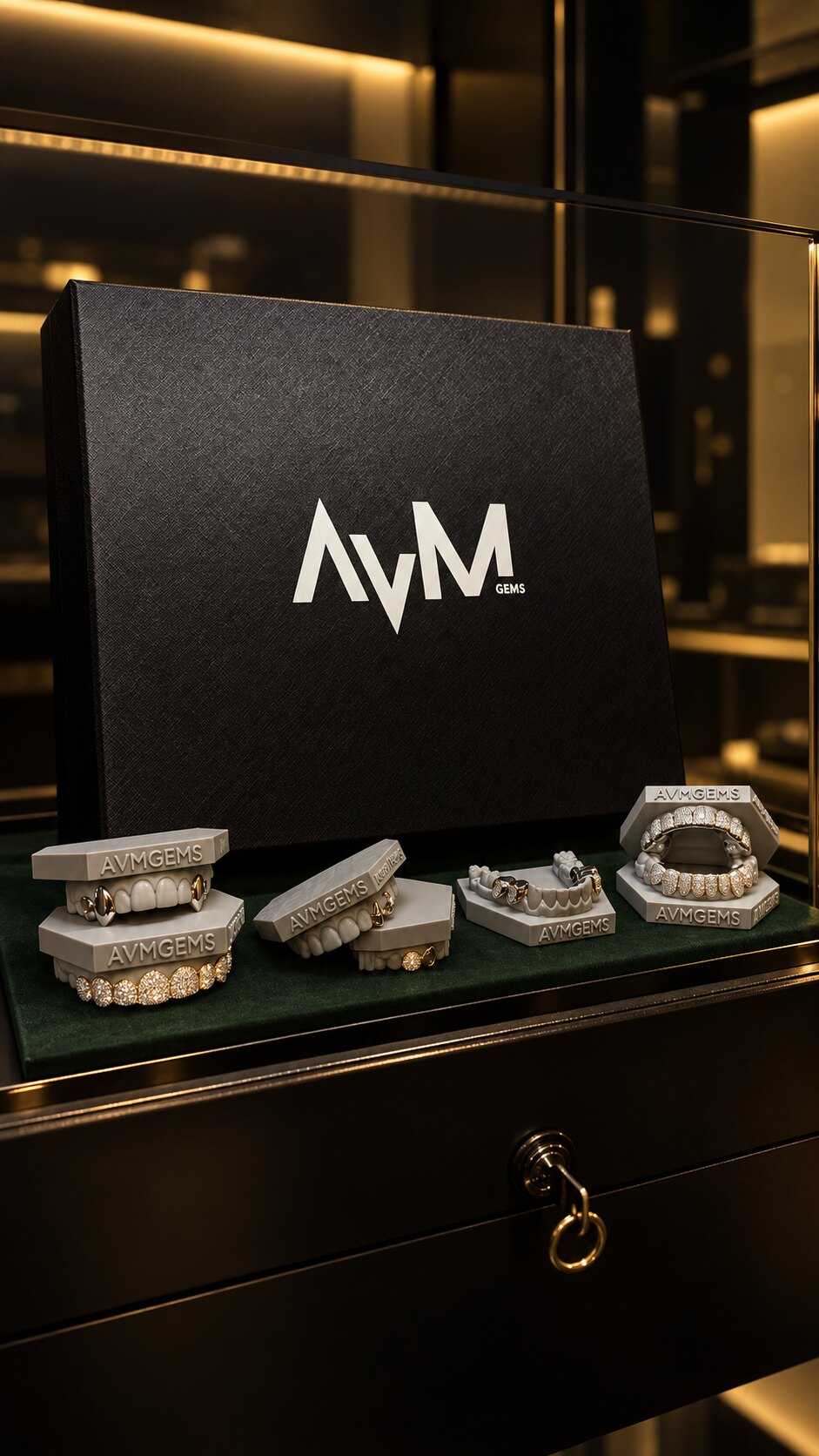
Heavy Ice, Heavy Weights
She has been lifting since tenth grade, and she started for a reason she states without decoration.
"I started during a tough period in my life. Coming to a new country as an immigrant, trying to figure out who I was, and starting over wasn't easy. Lifting brought me peace."
The country she left is Colombia. She is from Medellín.
What it gave her was proof, repeatedly, in a form she could measure.
"You finish a set that you thought you were too weak to do, something you thought wasn't possible, and realize you got through it. That feeling teaches you a lot about yourself."
"I don't train for likes. I train for life."
She maps it onto the business without straining.
"I think life and business are a repetition of difficult sets. You face something hard, you question whether you can do it, and you work through it. Then you look back and say, wow, I did that."
And the governing idea.
"You have to pick your hard. Nothing is going to be handed to you on a silver platter. You have to work for what you want and pay the price in one way or another. I choose to pay mine through discipline."
The question was which set she had to walk away from. Her answer is a deadlift, and what she does with it is more interesting than the lift.
"Sometimes the weight is simply too much, and that's okay, too. Lifting teaches you humility. You have to recognize how far you can safely go."
Most founders would not volunteer that. She goes further and applies it directly.
"You should take risks and do difficult things, but you also have to recognize when you can't do it all, when you can't do another set, or when you've reached your current limit. That doesn't mean you're done. It shows you where you need to improve."
"Knowing when to put the weight down is part of growing, too."
Three Rooms
Her practice sits where a culture, a craft and a luxury market meet, and those three rooms do not usually open for the same person.
Her answer to how she understands her place in them starts with a refusal.
"I'm entering all of these spaces because this is who I am, and I refuse to let anyone else define where I belong. I want to be part of the craft, the culture, and the luxury market. I don't think I have to choose just one."
She is honest about the friction without making it the story.
"It has also been difficult to be a woman in a male-dominated industry. Some people may feel more comfortable buying from a man, and I've had to navigate that. But I believe I've shown what I'm capable of through the quality of my work and the experience I create."
What she counts as the win is not the revenue.
"Now I have men and women from all walks of life trusting my process, and that means more to me than anything else. That trust is something I've worked to earn."
She connects it to where she comes from, in her own words.
"I refuse to be put in a box. Women are capable, and seeing other women, especially Latina founders, build businesses and make space for themselves means a lot to me."
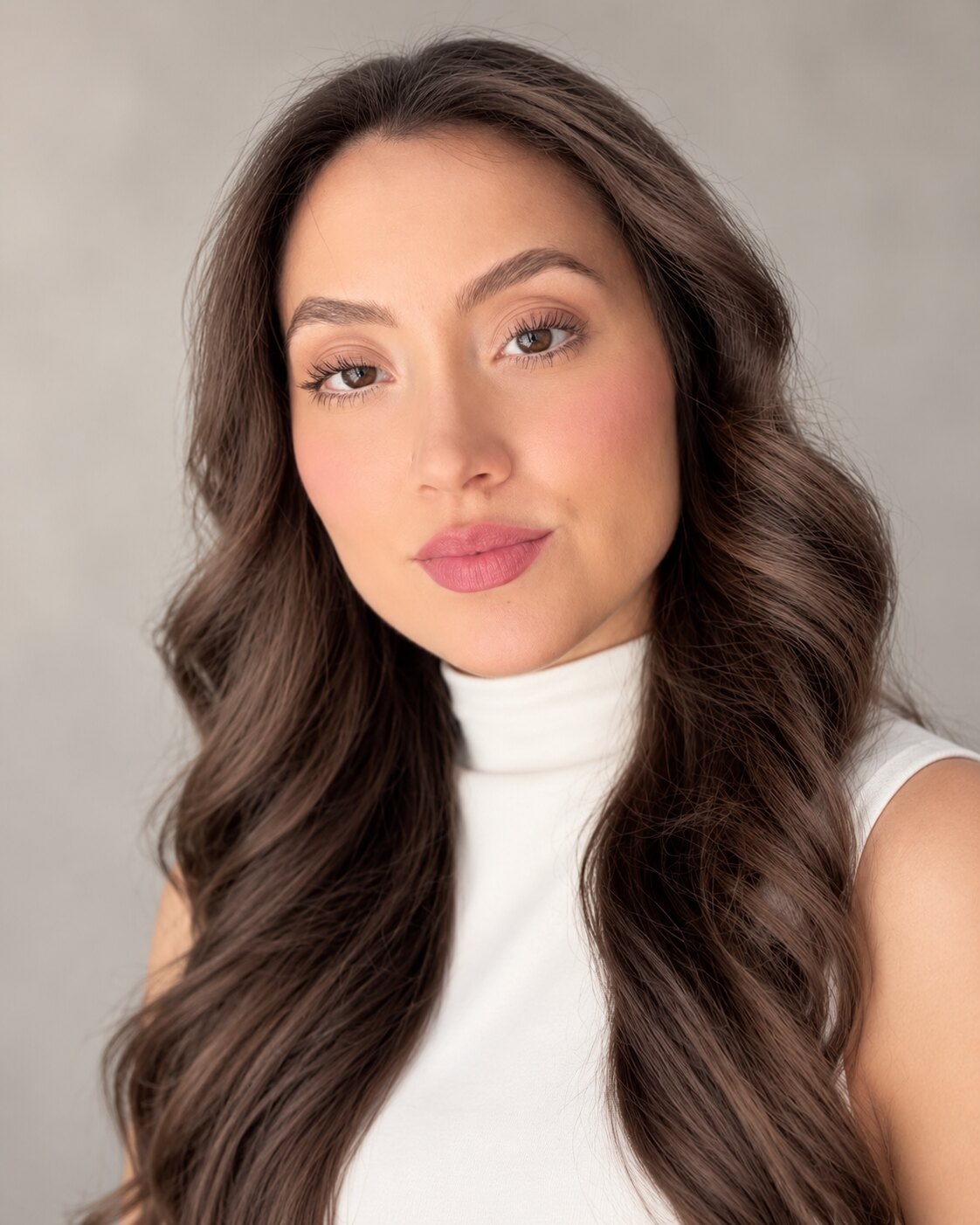
"For me, being a Latina woman is connected to how deeply I care. When I'm invested in something, I put my heart into it. That's how I approach my craft, my clients, and this business."
And then she closes it herself.
"I don't need someone else to decide whether I belong before I build something there."
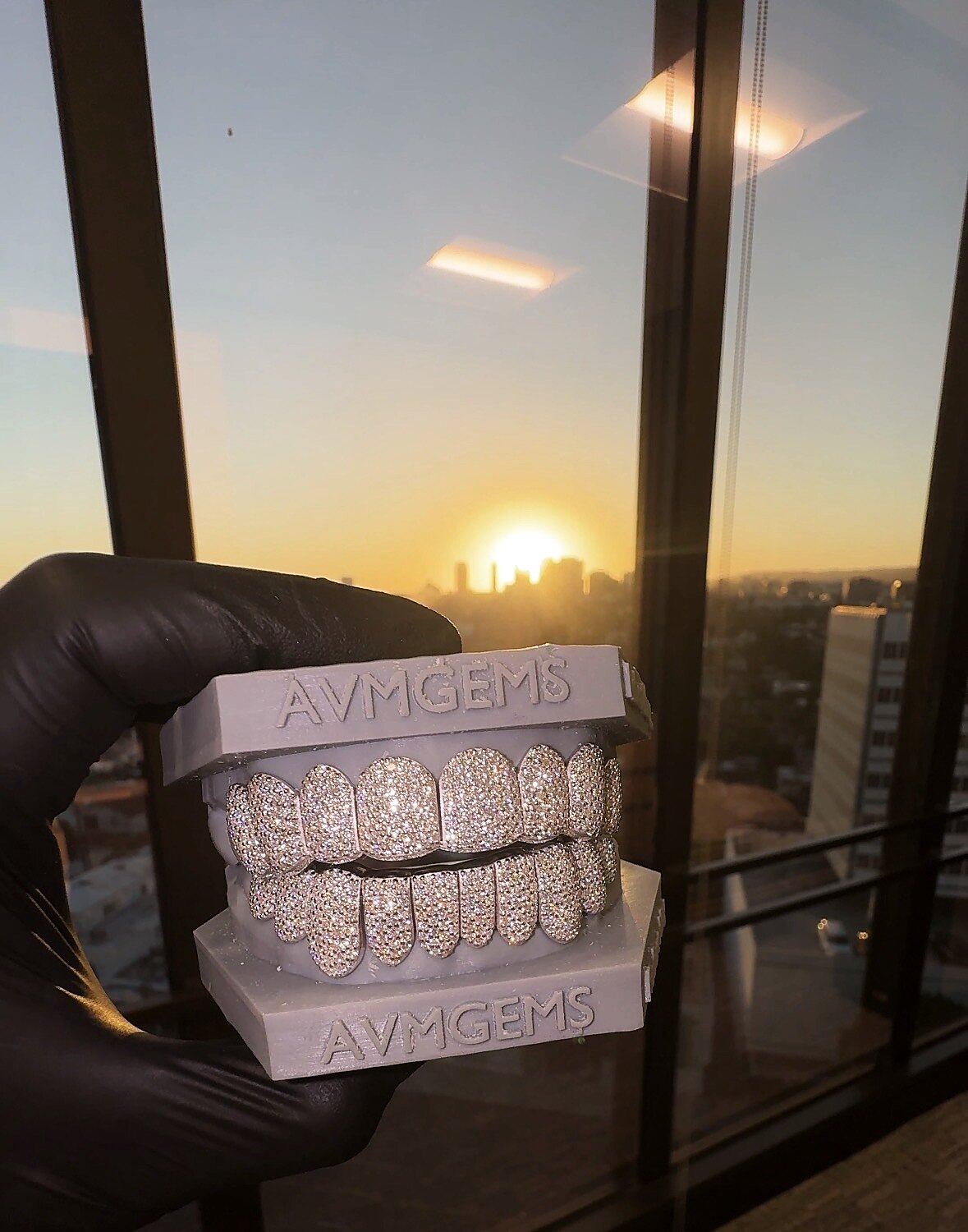
A woman arrived from Medellín, started over, found peace under a barbell, and built a business in a trade that had never made room for her. She put it in a luxury mall because the work was already worth the room. She bought the scanner because the people hardest to fit deserved the better tool. Then she opened in Beverly Hills.
She built it. She owns it. She paid for it.
Valentina Zuluaga · Founder & CEO, AVM Gems
avmgems.com · @valentinamadeit_avm
Scottsdale Fashion Square · Beverly Hills
Hers is a weekly column from Hip Hop Weekly featuring women who built their own. Beauty honored. Work centered.