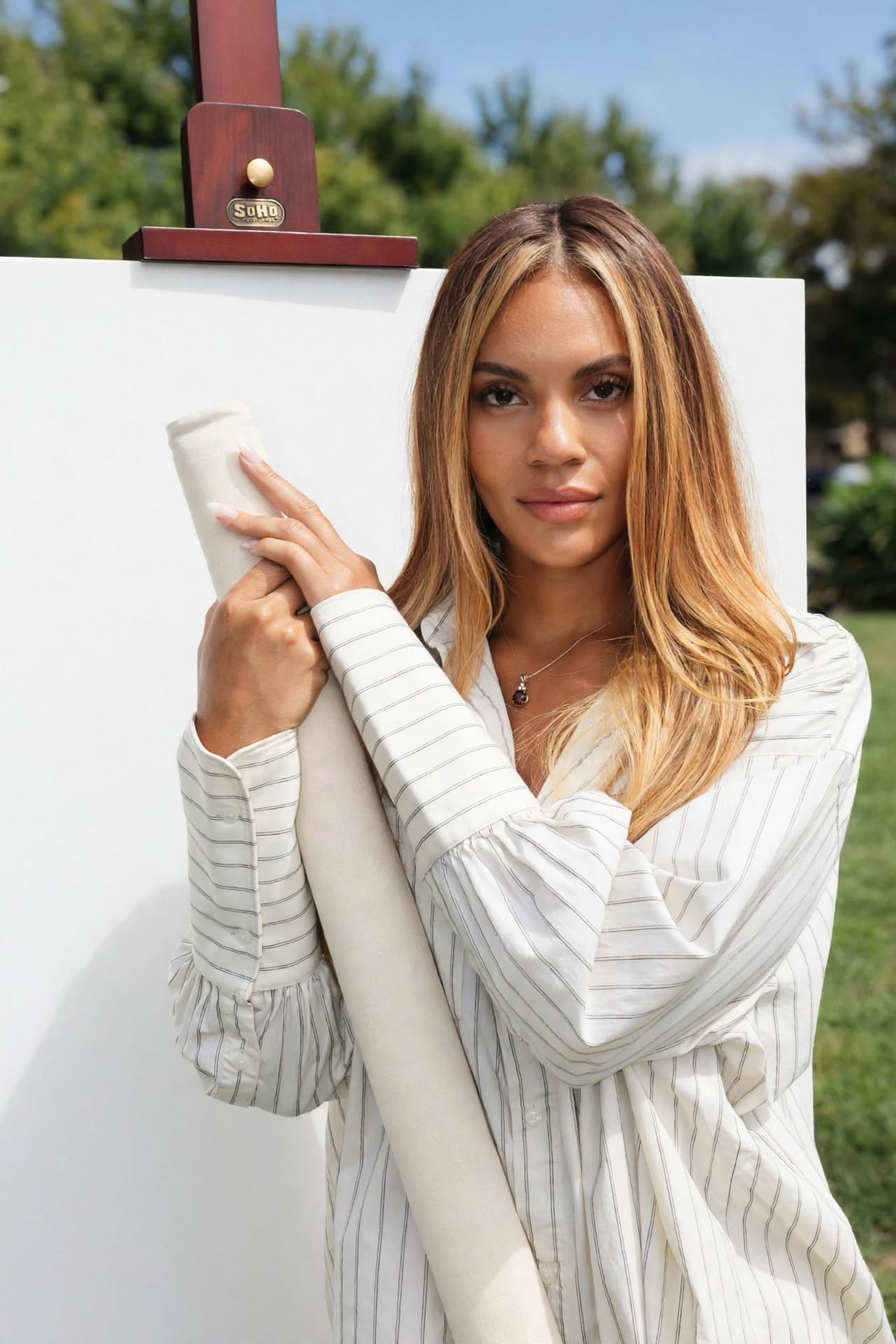
Odessa Hambric paints faces. That is where this starts, and it is the part everybody skips.
She works oil on canvas, graphite and charcoal on paper, and she has pushed into glass and sculpture, and all of it runs on one instinct. "When I paint someone, I'm fascinated by the characteristics that make that person uniquely themselves, the lines, beauty marks, freckles, texture of their skin, the way their hair moves," she says. Her eye finds the smallest thing in a face and builds the whole person outward from it.
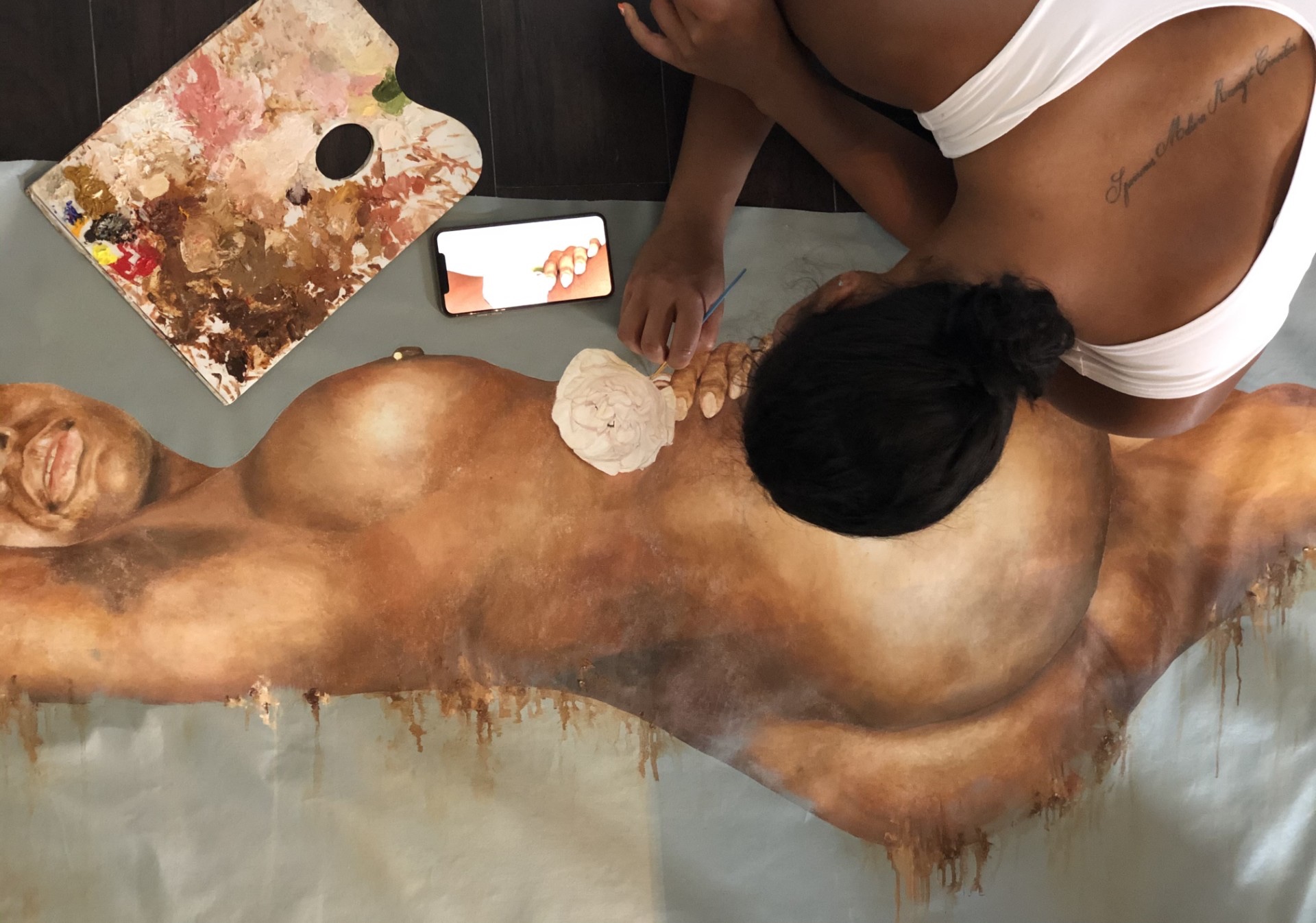
Then she turns that eye on melted plastic, and the material refuses to cooperate.
"Working with melted plastics forces me to work quickly," she says. "Instead of perfecting every detail, I discover and appreciate the textures, lines and imperfections that form within the material and ultimately give each piece its own identity."
One eye, two disciplines, opposite methods. Portraiture is slow and it is total control. The sculptures are fast and they are surrender. She is hunting the same thing in both: the mark that makes this one unlike any other one.
The Form Is a Handbag. The Thing Is Not.
Call them handbags and she will let it pass. Ask her directly and she corrects the record.
"I don't know that the sculpture ever 'wanted to be a bag,'" she says. "I still call them sculptures."
The question she started with was not how to make an accessory. It was this: "I wanted to merge my love of art, fashion and culture by asking: how can someone carry art with them? The handbag became the form, but the intention was always art that could move through the world with you."
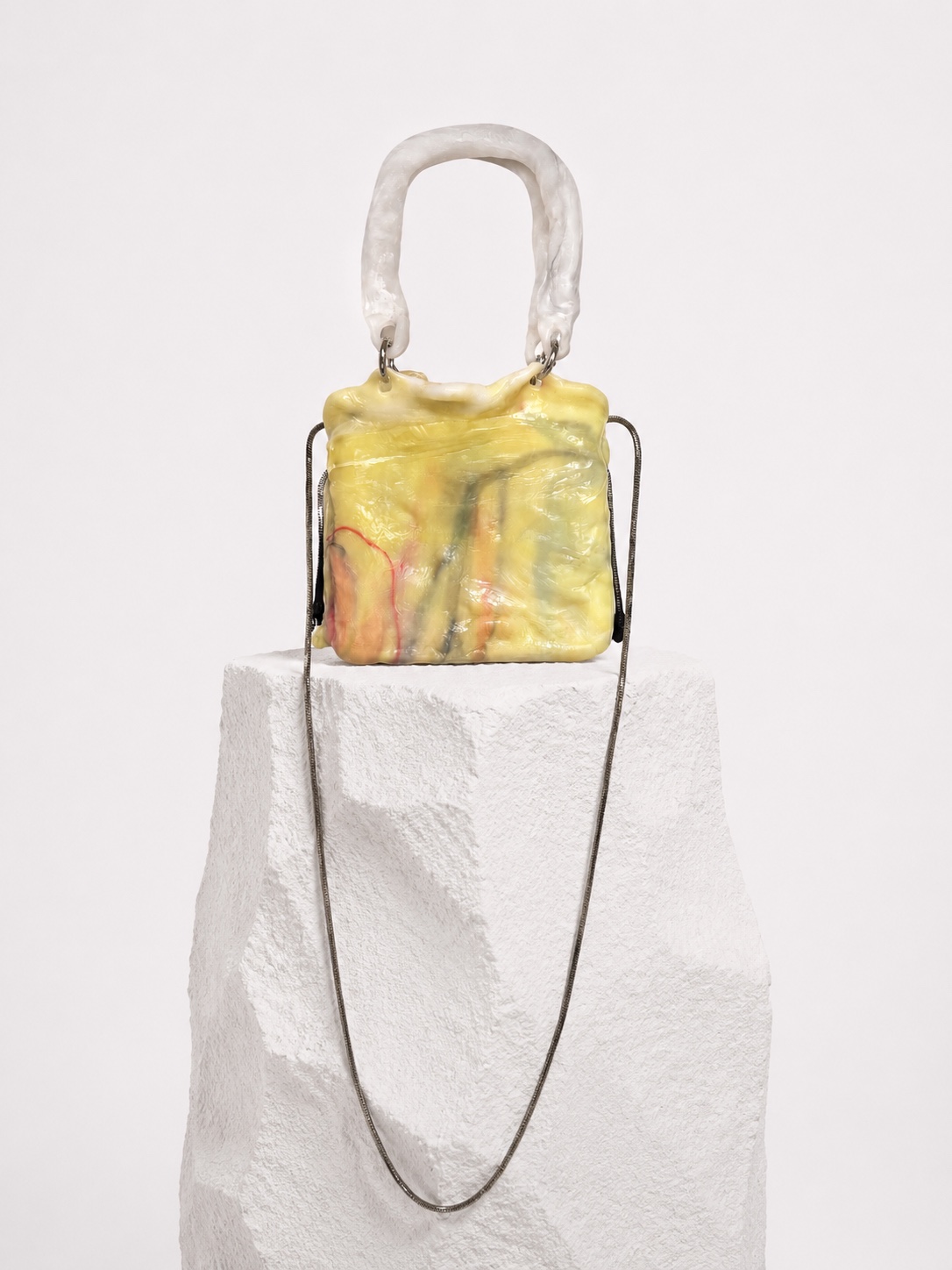
Look at how she photographs them. Not on a model's arm. Not styled flat on linen. On a plinth, lit against white, the way a gallery shoots sculpture. She made the argument in a photograph before she ever had to make it in a sentence.
Thermoplastic, worked by hand while it moves. Paint layered in by hydro dip. A crystal strap on one, silver chain on another. Collections that run in seasons since SS22, through Elemental and Gore and Skinline and Liminal. Every piece carries a name and not a number. Nymphaea. Vellum. Azurite. Patina. Tomb. Bandit. Bone. Salt.
Black Heart went out at four hundred and seventy dollars, built with GODNII around a red frame made from material held since the 1950s.
Most of the catalog reads the same way now. Sold out.
Detroit Is Not a Location Tag
Ask a lot of artists about their city and you get a line for the bio. Ask her and you get an inventory.
"I grew up in Detroit surrounded by art, music and fashion. There are murals throughout the city, festivals centered around music and art, and a distinct sense of style. From techno to the way people wear their furs and Cartiers, there's a confidence and creativity that is uniquely Detroit."
Furs and Cartiers. Only somebody from here writes that sentence.
The other half of it happened at home. "I was also raised by a mother who brought that creativity and duality into our home. She showed me that I didn't have to be one thing. I could be curious, try something new, test a theory and see where it took me."
That is the whole practice explained in three sentences. A woman who moves between oil, graphite, glass, plastic and film without asking permission was raised by someone who told her she did not have to pick.
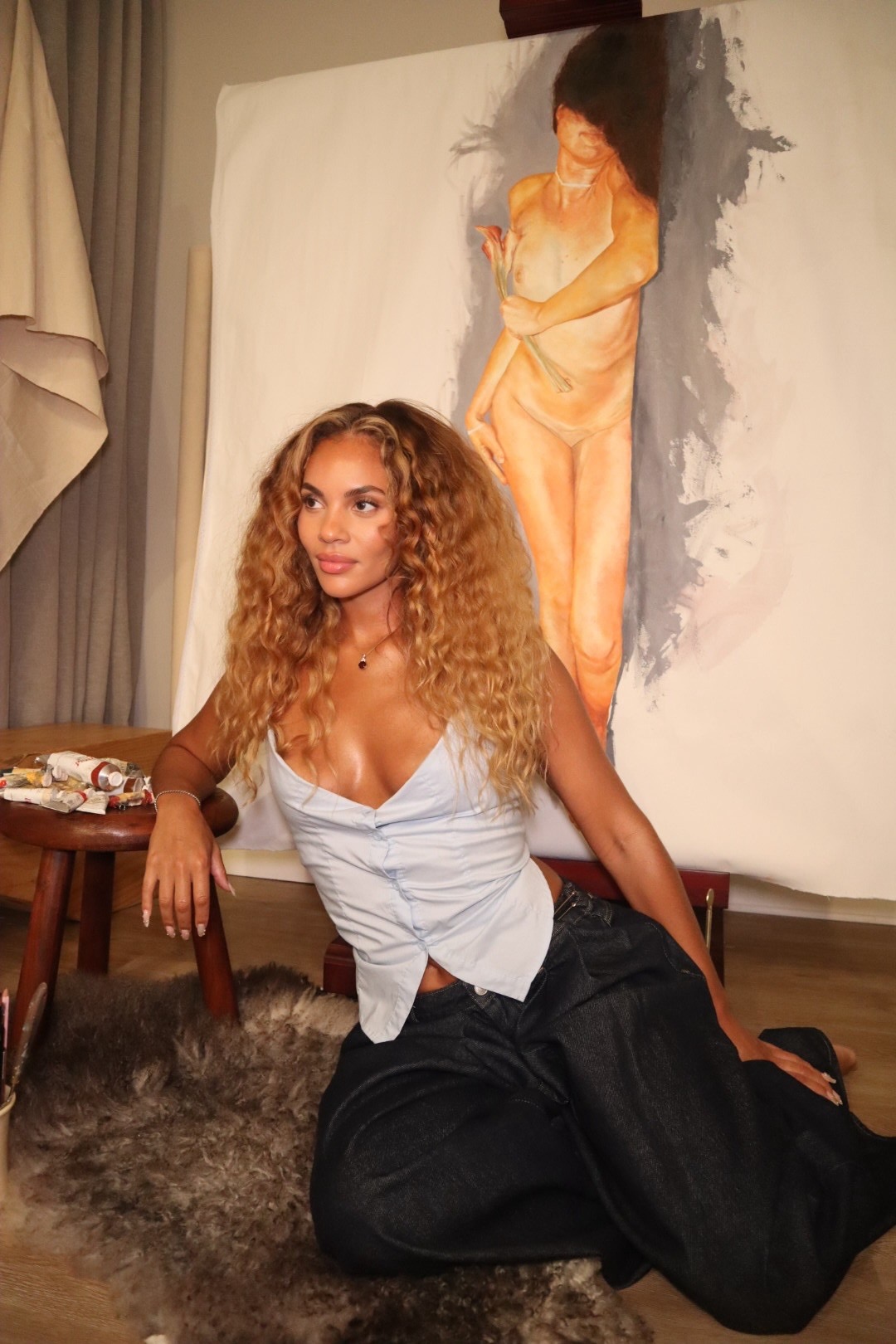
So when the question comes about where the city shows up in the work, she declines the premise of that one too.
"I don't know that someone can point to one element of my work and say, "That's Detroit."
"It's not so much that Detroit shows up within my art because Detroit is within me."
"It shaped how I see creativity, personal style and possibility before I understood I was developing an artistic point of view."
One of One, On Purpose, At a Cost
Every sculpture she makes is singular. She could run any of them again tomorrow. Every instinct in the category says to, and the sold-out catalog says the demand is sitting right there.
She does not.
"When someone owns one of my sculptures, I want there to be something special about knowing that particular piece was made by my hands and only they have it. Even if I reinterpret a previous piece, it will never be exactly the same."
Then she puts the whole thing on the table in one line.
"I think about it the same way I think about a painting. An original carries the marks of the artist, and there is only one original. Why should a piece of art become less singular simply because you can carry it?"
She knows exactly what she is turning down. "Production might allow me to make more, but staying one-of-one protects the part I care about most: what you're carrying is still art."
The Umbrella
ART X ODESSA is not a product line. She built it as a room she can keep working in.
"ART X ODESSA has become an umbrella for my creativity rather than something defined by one medium," she says. "It gives me the freedom to paint, sculpt, explore new materials, tell visual stories, creatively direct and collaborate with other artists without feeling like I have to choose one identity."
The sculptures cracked that open wider than she planned. "They were never just objects to make, photograph and sell. Every piece has a name and its own identity, and collections have become opportunities for me to build stories around the work through short films, photography, painting and creative direction."
"An idea can begin with something I sculpted by hand and grow into an entire visual world."
She is proudest of the part that brings other people in. "I'm especially proud that those worlds have created opportunities to bring other creatives into them, because collaboration has taken some of my ideas further than I initially imagined."
What is next, she will not say, and not because she is holding it back.
"I don't know that I ever want the audience to know exactly what's coming next, because most of the time, I'm still discovering it myself."
The Seat
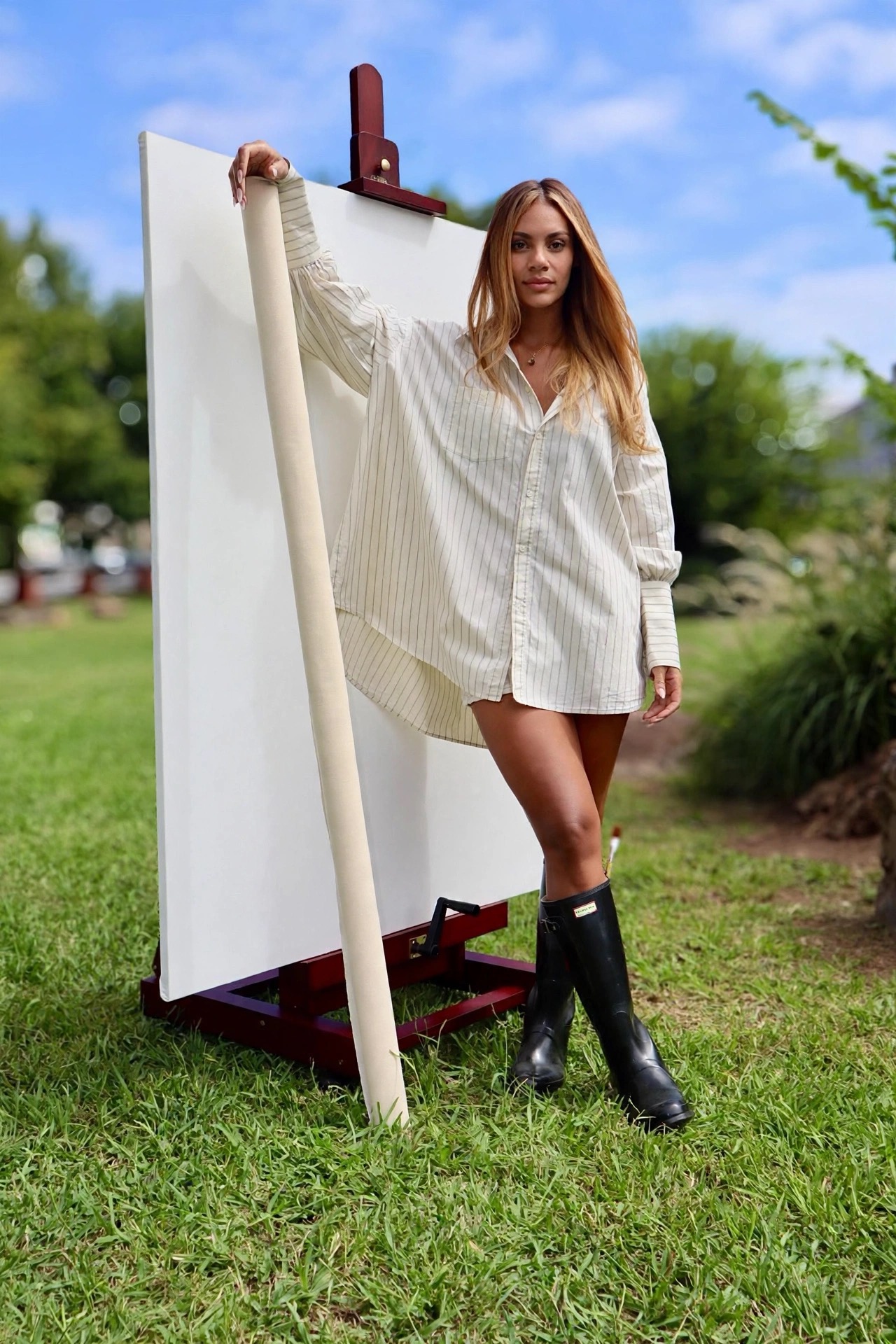
Fine art and fashion do not usually open for the same person. She stopped waiting on either one.
"I've always believed I can walk into any room and sit at any table if I believe I belong there. I don't feel like I have to choose between fine art and fashion or wait for either world to give me permission to exist within it. I'm a portrait artist. I'm a painter. I'm a sculptor. I'm a creative director. I love fashion. All of those things are true at the same time."
She knows what gets asked of women in those rooms. "As a woman moving through these different spaces, I think there can be an expectation that you define yourself in a way that makes it easy for other people to understand where to place you. I've become comfortable not doing that. I would rather allow my work to evolve honestly than limit myself to one room simply because I've already been welcomed into it."
And then the line that ends it.
"I think belonging begins with believing that you belong. So whether the room is a gallery, a fashion space, a film set or somewhere I haven't entered yet, I'm not approaching it wondering whether there's a seat for me. I know I can sit at the table and bring something of my own to it."
She paints faces. She sculpts things you can carry. She named every one of them. She sold nearly all of them and she will not make a single one twice.
She built it. She owns it. She paid for it.
Odessa Hambric · ART X ODESSA
Commissions and inquiries: Odessa@artxodessa.com
Hers is a weekly column from Hip Hop Weekly featuring women who built their own. Beauty honored. Work centered.