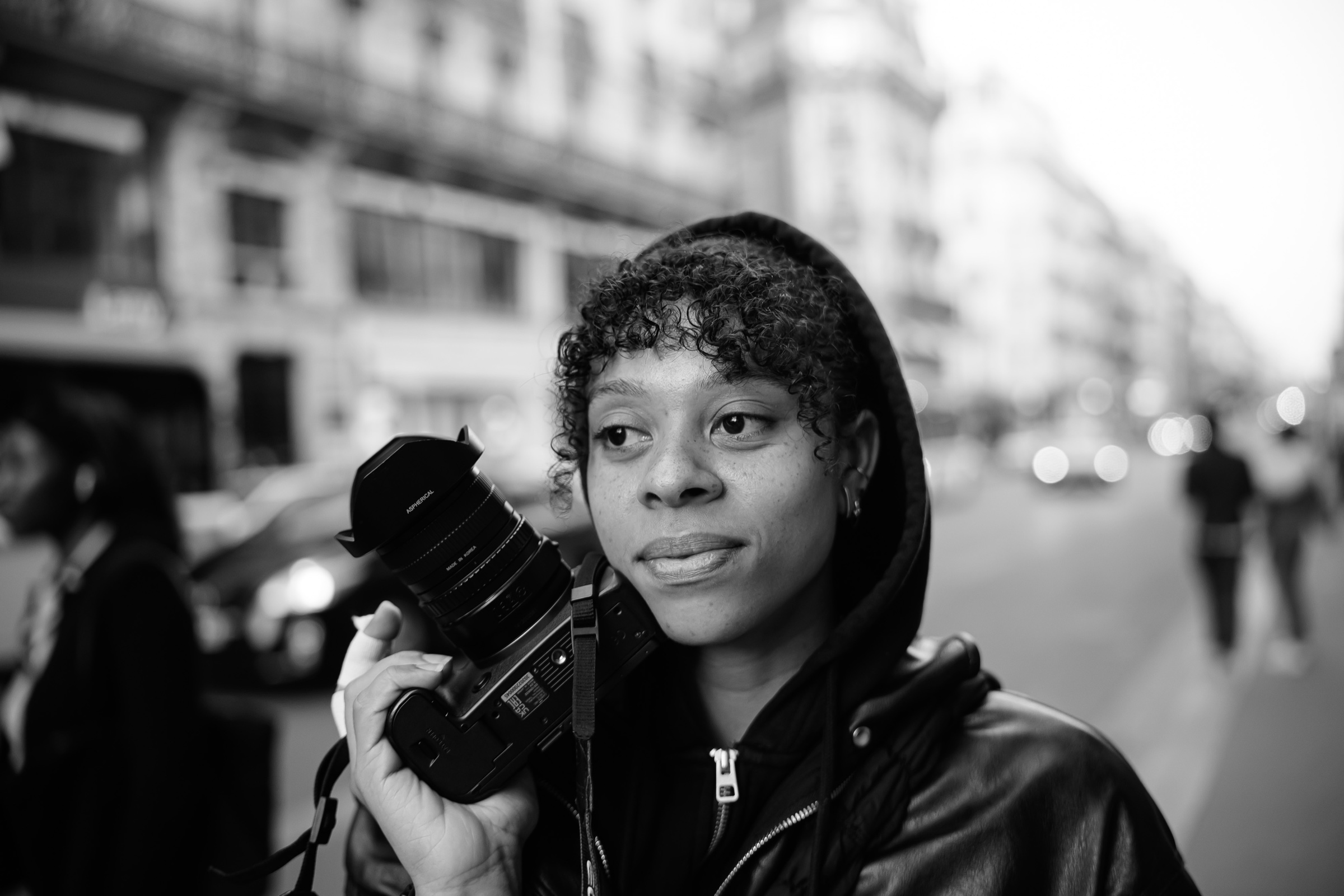
The part before the part everybody saw
Here is what makes that afternoon worth a magazine piece rather than a repost.
When Chloé started taking pictures, she could not photograph people at all.
"I can't take pictures of people. I'm too shy. It's too much for me."
That was the plan. Landscapes. Things that do not look back.
She was living in the United States when photography went from something she did to something she wanted. "It's a passion," she says, and then the practical question arrived behind it, the one every creative person eventually has to answer out loud. What do I want to do when I get back.
She went to photography school in the south of France. Two years. And in the final year the coursework put portraits in front of her, because coursework does not care what you are afraid of.
"I had some portraits to do. And I was like, actually, I really like that."
That is the whole hinge. Everything after it, including the two seconds outside that show, runs through a photography student discovering she liked the thing she had organised her work around avoiding.
The job that was not it
After school she took a job that had nothing to do with photography, for the reason everyone takes that job. Money.
Then she went to Paris, because she loves fashion and because, as she puts it, that is simply where it is.
Her first work there was shooting pack shots for a company. Product photography. Clean, repeatable, identical.
"It's always the same thing. So it's not true. You don't get to be creative or whatever."
She quit and went fully freelance. She also works as a studio assistant, which is the unglamorous half of a photographer's life and also the half where you stand close enough to big productions to learn how they are actually run.
L'atelier de Chloé
Five years ago, in the summer after her first year of photography school, she decided to change the name on her account.
She did not want to use her first and last name. She is not entirely sure why.
"I wanted something a bit more special. So I don't know where it came up from."
What arrived was L'atelier de Chloé.
Asked to translate it, she stops. "I don't have the word in English," she says, and then finds the nearest thing. "It's like a workshop, let's say, of myself."
Atelier is usually rendered as workshop or studio, and neither quite carries it. An atelier is the room where the work is made and also the practice of making it. The closest English has is probably the sense in which a painter has a studio, meaning both the space and the hand.
Ask her directly whether it is a studio, a collective, a company with people in it, and she does not dress it up.
"No. It's just me."
But that is not where she left it. Asked later to describe the name in her own words, she wrote back something better than anything a profile could invent for her:
"It's the choice that I made to name my business even if for now it's just me. I wanted something fun and not just my first and last name. Maybe because it's more than just me taking pictures. It's all experience that you live with me during a shoot."
A workshop is not a room. It is what happens in one.
The three in the morning idea
Before the ask there was the boredom, and the boredom is the real origin story.
For about two and a half years she shot fashion week the way everybody shoots fashion week. Standing where everyone stands. Making the frame everyone makes.
"I'm done. I don't want to do this anymore. Like, it's too much. Everyone has the same pictures. I want to do something different."
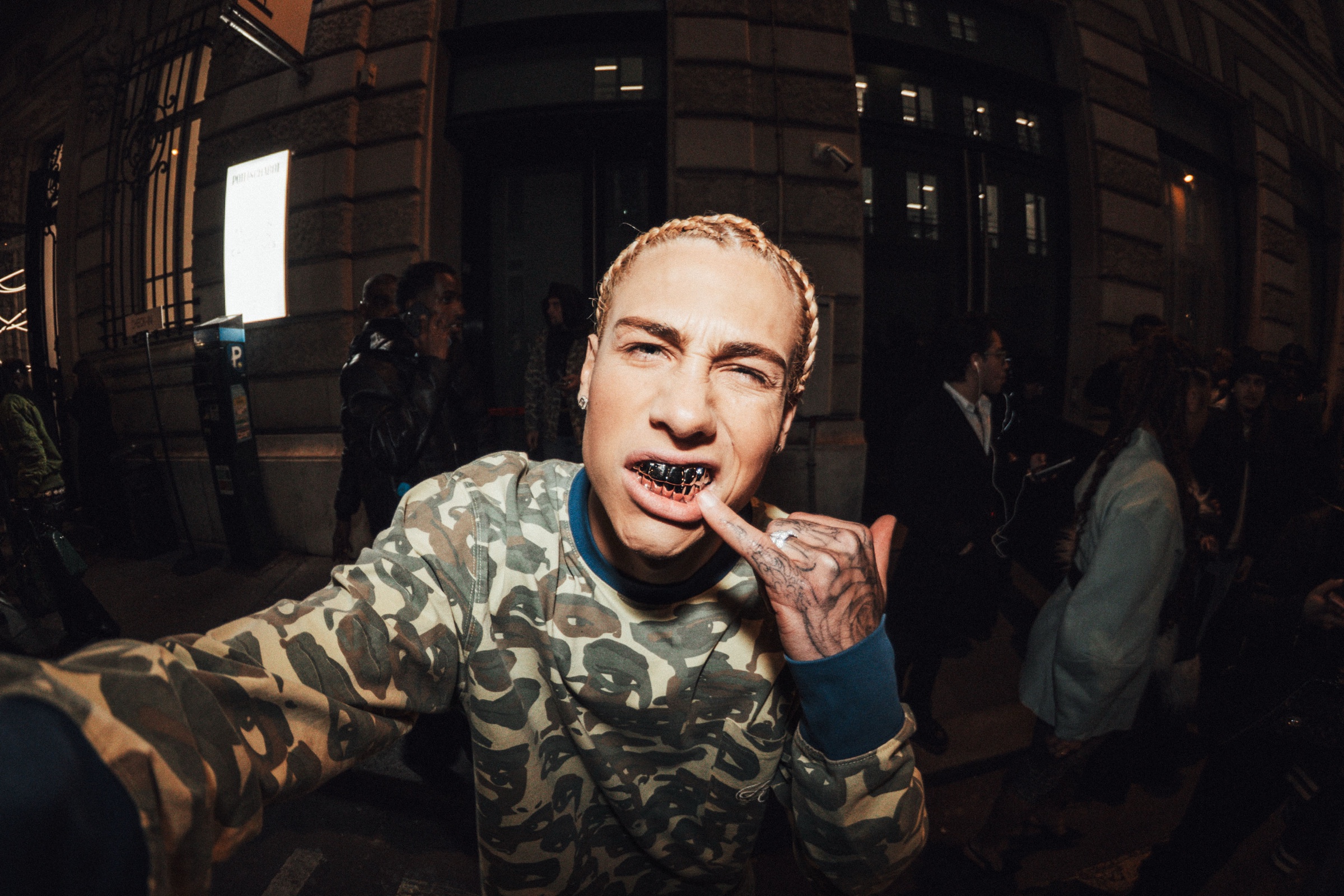
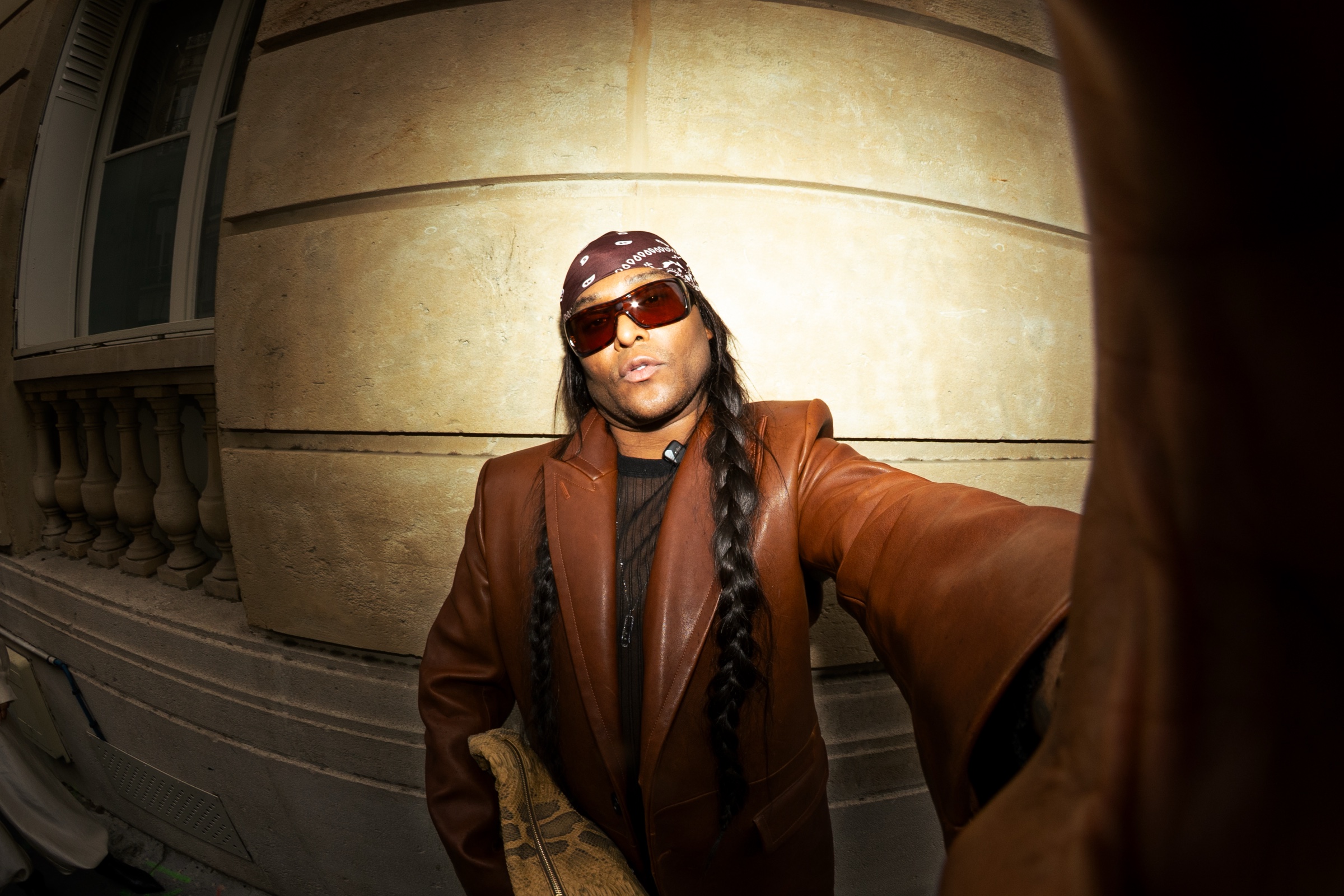
The alternative arrived at roughly three in the morning, in bed, the way these things do. She got up to write it down before it evaporated. A fisheye lens. Held out at arm's length, close, like a selfie, with the subject inside it.
She bought the lens on Amazon. She is cheerfully unromantic about the equipment.
"Not that much money. It's not that good. But I was like, I'm gonna try it and see if I like it or not."
And then the part she says almost in passing, which is the sentence the whole year turns on:
"It's an exercise for me to go and ask people."
She did not design a style. She designed a reason to walk up to strangers. The fisheye requires closeness. Closeness requires permission. Permission requires asking. The woman who could not photograph people built herself a technique that made asking compulsory.
480
On the day of the Law Roach picture, Chloé Bauve had 480 followers.
When we spoke she had eighteen thousand. The video was a month old that day, to the day.
She is not pretending to be casual about it. "It's kind of crazy," she says, and "somehow I have 18k on Instagram out of nowhere." But she is also extremely clear that the three years in front of it were not nothing, and that is the part she wants said.
"I've been doing this since three years and barely no one saw my picture."
Fashion week, for the record, pays her nothing. She goes anyway.
"Actually no one is paying me for it. It's like, really my own thing that I love doing."
She goes because the people she likes are there. "It's always a big reunion with some friends and everything. The mood is great."
Paris, which was not the plan
Chloé is from the south of France and has been in Paris about three years. People ask her why she left.
"Why are you not staying in the south of France?"
Her answer is unsentimental in a way that will be familiar to anyone who has moved somewhere for work rather than for love of the place.
"If I want to do what I like, I can't stay south of France, sadly, because everything is happening in Paris. Fashion Week is in Paris. All the stuff is in Paris."
And then, flatly: "Even if it was not the city I wanted to live in. But gotta do what you gotta."
What people get wrong
Ask her what outsiders misunderstand about the job and she does not reach for anything abstract. She goes straight to the invoice.
"They always think taking pictures is just like turning on the camera and clicking the button."
Then she lists what is actually in there. Settings. Lenses. Which camera. Choosing the frames. Post-production, the colours, the hours after. The light and the flash, which are their own discipline.
"A lot of people wonder why photographers are always so expensive. Because it's not just one hour of shooting or whatever it is, or 15 minutes. There's also work before and after."
She has clients who want finished images before she is home.
"You barely had time to go home. Do you have the pictures yet? I'm like, I just went home."
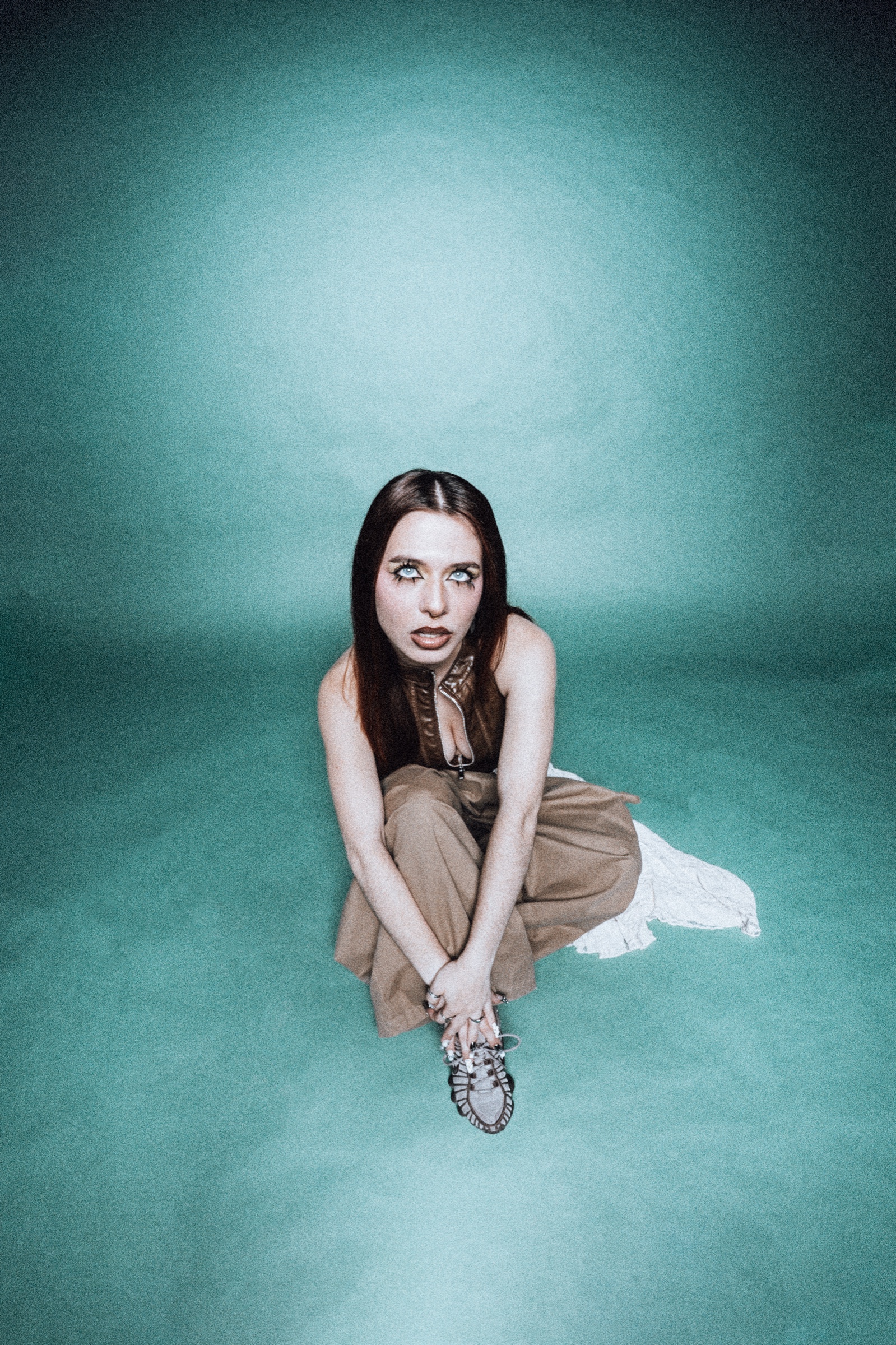
She works across more than one kind of job and refuses to rank them by love. Fashion week is speed. Studio is the opposite, where she gets to think about the makeup, the styling, where the light should sit. Backstage is its own thing again.
The one that pays best, she says, is big production. The others she does because she wants to.
What she wants next
She does not have a five-year plan and does not pretend to.
What she wants is more studio work for brands, editorial campaigns, and one specific thing she names without any edge in her voice, which is notable given where she has been standing for the last two and a half years.
She wants to be inside the show.
"I'm up for anything, and everything is a challenge."
The last thing she said
Near the end of the conversation she started a sentence and stopped herself, and then went ahead with it.
"For women especially, it's so hard. You always want to give up, especially in photography because you always get compared to men."
She described a set. Not as an argument, just as an inventory of who is standing where.
"During photo shoots, it's always a male photographer. For the light, it's a male. The digi, the one who's doing the post-prod live, a male. Always males everywhere. Men, men, men."
And then:
"So when you're woman in that field, somehow you have to keep trying. And we're gonna make our space."
She offered one more thing, for anyone reading this who is standing outside something with their equipment packed away.
"Sometimes you have to go against what you don't like. Like, for me, like going to people and stranger and asking for something because I always feel like I'm intruding or I don't want to be too much or whatever. Worst case scenario, they're gonna say no, and it's okay."
"If you have a dream or goal, don't give up. Even if it's hard."
Three years of pictures almost nobody saw. One lens bought cheap off the internet because of an idea she had at three in the morning. Two seconds to get the camera back out of the bag.
And a woman who was too shy to photograph people, walking up to a stranger to ask.
She was too shy to ask. So she built a reason to.
Chloé Bauve · L'atelier de Chloé · Paris
@latelierdechloe.photo · latelierdechloe.portfoliobox.net
Hers is a weekly column from Hip Hop Weekly featuring women who built their own. Beauty honored. Work centered.