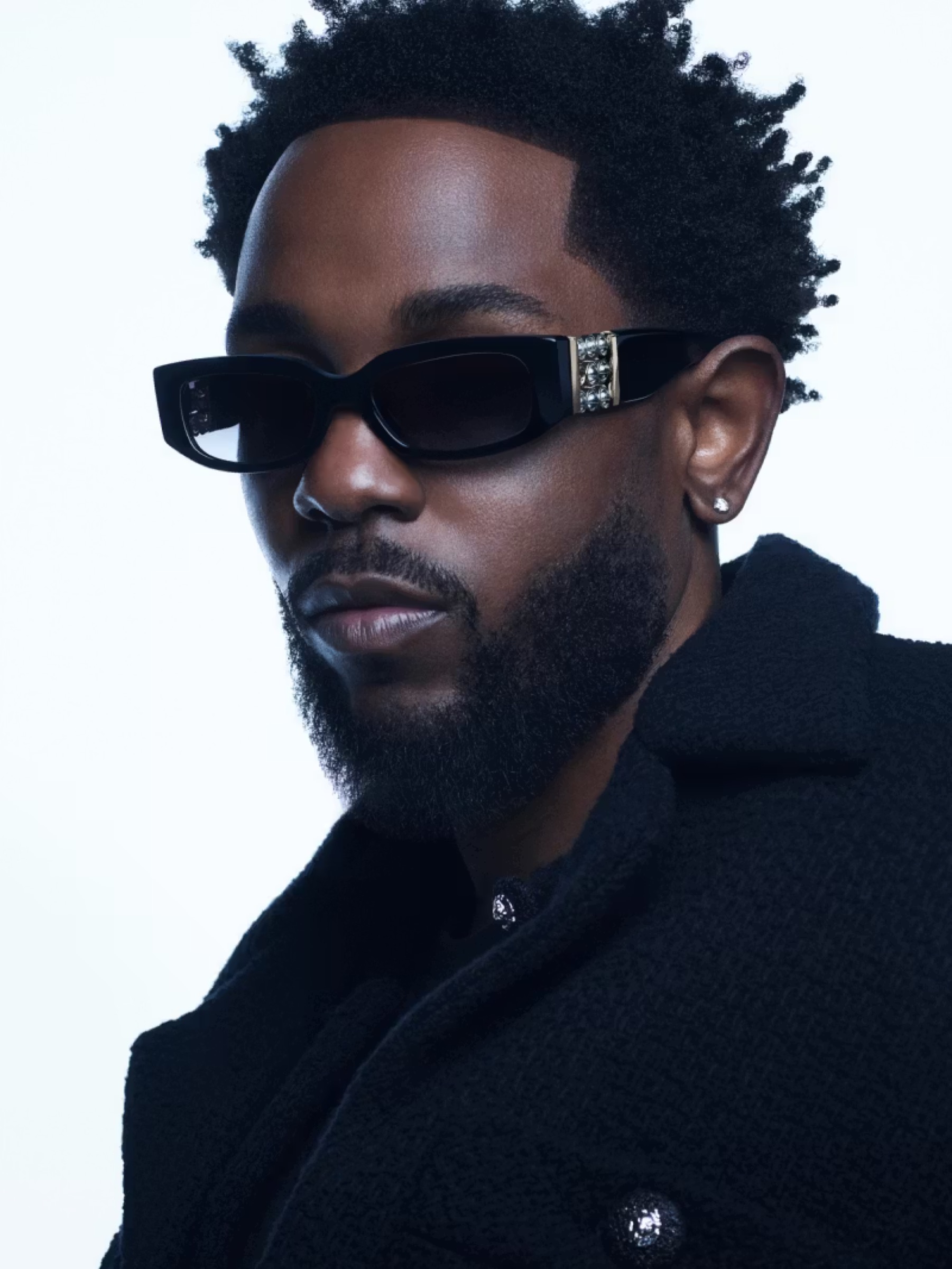
 Courtesy pgLang Courtesy pgLang
 Kendrick Lamar has never needed permission to matter. But this moment, this convergence, is undeniable.
Since the last time the Grammys rolled their red carpet, the country has changed. The temperature is different. The language is harsher. Protest has been criminalized, truth is litigated, and power feels increasingly allergic to accountability. In that time, Kendrick Lamar did not chase the noise. He outlasted it. Tonight On February 1, the first day of Black History Month, the Grammys returned, and Kendrick Lamar stood at the center of the night. He entered with nine nominations, a record breaking tour, a culture shifting album, and a body of work that already felt less like entertainment and more like documentation. This was not a hot streak. It was a ledger.
When Kendrick swept the 2025 Grammys for "Not Like Us," it was not just a victory lap. It was a warning shot. Five nominations. Five wins. Record of the Year. Song of the Year. Best Rap Performance. Best Rap Song. Best Music Video. By then, Kendrick was no longer arguing for relevance. He was setting terms.
Released in November 2024, GNX did not arrive with spectacle. It arrived with gravity. Every track debuted on the Billboard Hot 100. The album became Kendrick Lamar's fifth consecutive studio project nominated for Album of the Year. Not because it was trendy, but because it was unavoidable.
"Luther," his collaboration with SZA, did not simply top charts. It occupied them. Thirteen consecutive weeks at number one on the Billboard Hot 100. Twenty three weeks atop the Hot R and B and Hip Hop Songs chart. Twenty seven weeks at number one on the Hot Rap Songs chart. That was not marketing. That was saturation by resonance.
Meanwhile, the Grand National Tour rewrote the record books in real time. It became the highest grossing hip hop tour of all time. The highest grossing co headlining tour in North American history. The biggest single night rap concert ever recorded. Stadiums were filled not by nostalgia, but by urgency. That urgency carried all the way to the Super Bowl stage. New Orleans. SZA. Mustard. Serena Williams appearing like punctuation. A West Coast truth broadcast through the most American institution there is. That performance was not about reach. It was about placement.
The thing about Kendrick Lamar is that his catalog ages forward. Nearly a decade ago, "Alright" became the unofficial anthem of protest. Not because it was designed to be, but because it told the truth at a moment when truth was dangerous. It was chanted in the streets. Sung through tear gas. Whispered by people who did not know if the country would survive itself.
That song never expired because the conditions never changed. As Black history continued to be debated instead of honored, and legislated instead of taught, Kendrick's work felt less like memory and more like instruction. His music did not simply respond to America. It held America to task. That is why this moment mattered.
On the night of February 1, 2026, Kendrick Lamar did more than add trophies to a shelf. He reset the record books.
That night, Kendrick Lamar won Best Rap Album for GNX.
Best Rap Song for "tv off" featuring Lefty Gunplay.
Best Melodic Rap Performance for "Luther" with SZA.
Best Rap Performance for "Chains & Whips" by Clipse featuring Kendrick Lamar and Pharrell Williams and Record of the Year for "Luther" with SZA.
At that point, the conversation changed. This was no longer about a single year, a dominant run, or a cultural peak. It became about accumulation. Longevity. Architecture.
Awards are designed to freeze time. To crown something and move on. Kendrick Lamar refused that premise. GNX did not simply speak to the present. It interrogated the machinery that produced it. Power. Surveillance. Masculinity. Faith. Trauma. Survival. His writing did not flatter the listener. It challenged them. And that is precisely why it lasted.
As someone from Compton, the younger brother of Rakaa Iriscience of Dilated Peoples, who gave us the phrase "Proper Propaganda" long before it became a book title and as a DJ and broadcaster who has watched the culture get commodified, diluted, and misunderstood, I recognize what Kendrick Lamar has been doing. He has protected the African Americanness of hip hop in an era determined to sand it down. He has proven, again, that commercial success and artistic integrity are not opposites. That protest can chart. That introspection can sell out stadiums. That truth can still move units.
There is a familiar habit in how culture handles greatness while it is still alive and working. We celebrate it. We quantify it. We reward it. But we hesitate to name it fully. We tell ourselves that history requires distance. That legacy can only be assessed once the work is complete.
It is the same reflex that shapes the Jordan and LeBron debate. One figure preserved, sealed, and mythologized. The other evaluated in real time, penalized not for failure, but for continuing. Kendrick Lamar exists squarely inside that discomfort. Not because the résumé is thin, but because it is still expanding. Because the work has not retreated into memory. Because he is still shaping the standard rather than benefiting from it.
So the question is not whether Kendrick Lamar belongs in the conversation about the greatest to ever do this. The evidence has already answered that. The real question is why we so often act as if being the best right now disqualifies someone from being considered among the greatest ever.
Hip Hop Weekly returned during Black History Month not by accident, but by alignment. Kendrick Lamar does not represent a trend. He represents a standard. A measure of what happens when an artist refuses to separate culture from consequence. When success is not an escape from responsibility, but a platform for it.
This was not a Grammy story.
It was a Black history story.
Still being written...
...and if history teaches us anything, it is that the figures we hesitate to name while they are still here are often the ones we end up measuring everyone else against.