
The record that put her on national radio in France was supposed to be her last one. She released it and went on holiday. Then the call came, and she found herself standing solo on the same stages where she had spent her twenties singing behind somebody else.
She had already decided it was over.
Plus l'Time was not a comeback or a strategy. It was the last one. Léa Zélia had put out records before and watched them fail to land.
"I had so many failures in my projects that for me the title Plus l'Time was the last."
She released it. Then she went on holiday, the way you leave a room you have decided not to come back to.

The call came while she was away. The record was on the radio and television playlists, and on Spotify and Deezer. She puts it past twelve million streams, counted across the platforms together.
"It was unreal, I had a hard time believing it," she says. And then the part people do not usually admit about the best day of their career.
"I cried with joy but also I cried from everything I had come before."
Not just the win. The years underneath it, arriving all at once.
She knew in her first year of high school.
She had been dancing since she was very small. Then opera, which is where she started. Pop, Latin and variété came after, and they ask something different of the voice.
"Opera is totally different in the placement of voices," she says, which is the kind of distinction only somebody trained in both would make.
What settled it was not a teacher. It was a television.
"I was a big fan of hip hop. I stayed for hours watching MTV."
Then she heard Alicia Keys.
"Deep down I was certain that I was going to live in Paris to realize my dream."
A girl in Bandol, a town on the Mediterranean coast near Toulon, eight hundred kilometres by road from the city she had just decided she was moving to.
She went back to music school. Then she started going to castings to sing backup.
Two years later she was on tour.
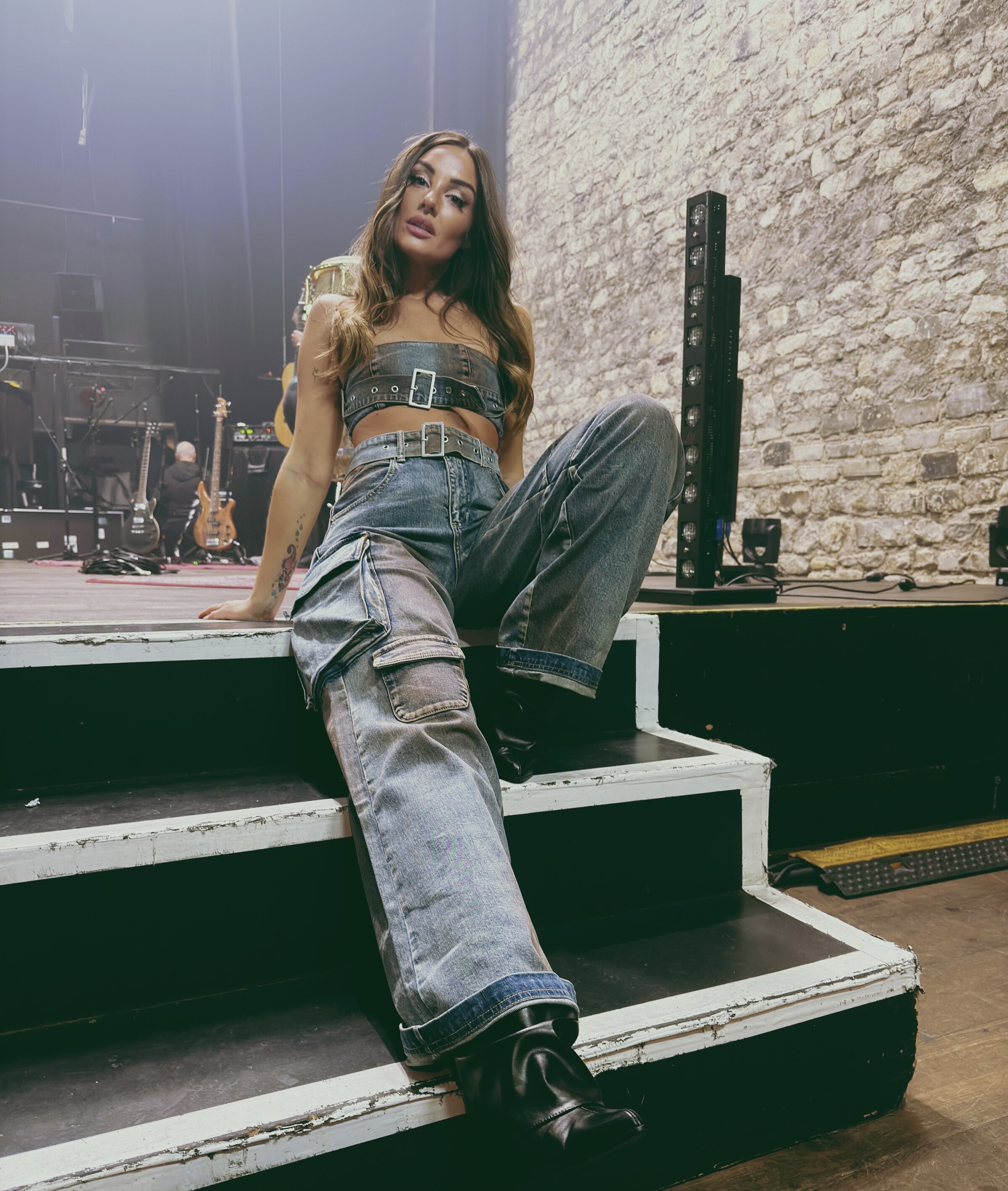
She was eighteen, nineteen years old, travelling through France and a little outside it, standing behind other artists.
Most people treat that as the part before the career. She does not.
"We had to have discipline to be in shape. Being a chorister is a lot of responsibility, because you have to support the artist, beautify the artist's voice and song."
Then the part that only somebody who has done it would think to mention.
"But there are also the vagaries of the stage. You have to know how to manage."
The vagaries of the stage. Everything that goes wrong in a live room, in front of people, while the person everyone paid to see is standing a metre in front of you and cannot be the one to fix it.
"I think for me it was the best school."
After the call, she did not float.
"I really kept my feet on the ground. I continued to work on the title."
What followed was two years of performing across France. And in those two years something happened that she clocked precisely, and that almost nobody in music gets to experience from both sides.

"I was on stage solo on the same stages as when I was behind the artists at the very beginning of my career."
The same rooms. The same boards. First behind somebody, then in front.
She does not dress it up. She just notices it, which is the more impressive thing.
She described her own path to this magazine before she answered a single question. Thorns, she said, and rose petals at the same time. A lot of roller coasters.
Asked what she meant, she did not reach for metaphor again.
"I made a lot of concessions to get to this point, and I am not yet where I want to be."
Then she says the thing the industry does not put in press releases.

"When everything goes well, that the light is on you, that you have good results, everyone calls you, everyone loves you, wants to stay with you, accompany you in concert. But when it happens that you no longer have the right numbers, that you are in the dark, there is no one left."
There is no one left.
She names the other cost too, the one that happens before anyone is counting anything.
"You do a lot of studio and in the end your title does not take. Sometimes it is frustrating. You say to yourself, where is the fault."
Where is the fault. Not whose. Where. She is not looking for somebody to blame, she is looking for the broken part, which is a different and lonelier way to spend a night.
And then she closes it herself, without being asked to.
"But music is like that. You have to be passionate."
She is not describing the past. She is describing a position she is standing in.
"I'm rebuilding everything."
The EP is called Lolita. Eight tracks, out in May. Then she stopped for a few months. Now she has taken the studio back.
"I am in creation. I change my artistic direction, to be more in what I like to do in terms of musical style."
Ask what she wants it to become and the answer is four words long.

"Stay me."
Then: concerts, to get closer to the people who listen.
That is the whole ambition. Not a chart position, not a format, not a bigger room. Remain recognisable to herself, and stand closer to the people who already turned up.
Asked what she would want someone to understand about this life who has never lived it, she does not make it sound noble.
"The artistic world is filled with uncertainty, full of disappointments. But I think that when we are passionate, we continue to achieve our goals, our dreams, and believe in what we do."
A girl in Bandol watched MTV and decided she was moving to Paris. She sang behind other people for years and called it the best school she ever had. She made a record she intended to be her last, and it put her on the radio across France, and she stood on the stages she used to stand behind on.
Then the light moved somewhere else and the room emptied out, which is the part nobody films.
She took the studio back.
Léa Zélia
A Hip Hop Weekly feature. The work leads. Nothing printed that did not come from her.