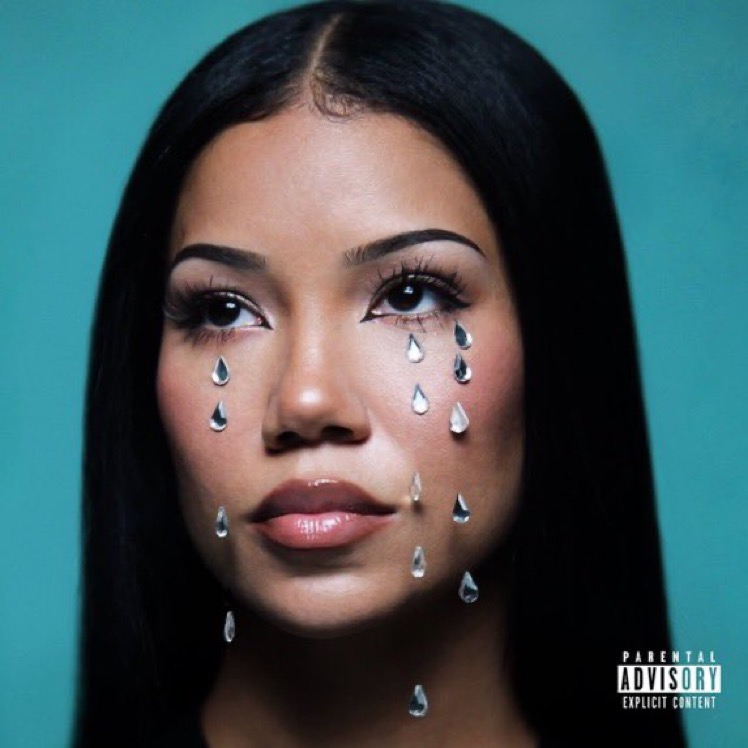
Jhené Aiko announced the album on a Tuesday and put it out on a Friday. By Friday night she held all ten songs in the iTunes R&B top ten and the number one album overall. No rollout. No lead single. Twenty tracks.
Here is the arithmetic, and the arithmetic is the story.
Tuesday, September 8, Jhené Aiko told people an album was coming. Friday, September 11, the album came. Twenty tracks, out through ArtClub International and Def Jam, her first full length in six years.
By Friday night she had all ten songs in the iTunes R&B and Soul top ten. Every single one. Ghost at one, Wild Cat(s) at two, So Good with Kendrick Lamar at three, and it keeps going like that to the bottom of the chart. Westside Whimsy was the number one album on iTunes overall.
Three days. That is the entire campaign.
You know what she was supposed to do, because everybody does it.
Announce a date six or eight weeks out. Put out a lead single and see how it tests. Cut it into fifteen second pieces and seed them until a sound starts moving on its own. Line up the covers. Do the podcast run. Drop a second single if the first one underperforms, push the date if the second one does too. Release the album into an audience that has already been softened up for two months.
That is not a cynical description. That is the actual job, and there are good people who are very skilled at it, and there are artists whose records genuinely need it.
She did none of it. She gave the world seventy two hours and a title.
Three days. That is the entire campaign.
A number one song means a lot of people pressed play on one thing. That happens all the time, and a good marketing team can manufacture it.
Ten out of ten is a different animal.
Holding an entire genre top ten means nobody is cherry picking. It means people are not pulling the Kendrick record off the album and moving on with their night. They are opening a twenty track project and playing it from the top, and enough of them are doing it at the same time that every song on the front half charts at once.
We are living in a singles economy. Playlists are the storefront. Most listeners meet an artist one track at a time and never learn the shape of the record that track came from. A full sweep is the exact opposite behavior, and it cannot be bought, because you cannot buy somebody's patience.
That is what she got in exchange for six years away. Not curiosity. Not nostalgia. Patience.
There is a version of a big feature that is really just a favor. An artist sends a file, a verse comes back, everybody gets a look, nobody's life changes.
That is not what happened on "So Good."
Kendrick Lamar has a writing credit on that song. He did not drop in and rap sixteen bars over somebody else's idea. He helped build it, and the record plays like it, a back and forth between two people rather than a host and a guest. Sounwave produced it alongside M-Tech, Scott Bridgeway and Jahaan Sweet, and Sounwave has been in rooms with both of these artists since Kendrick was making Overly Dedicated in 2010, which is the same project Jhené first appeared on.
The most decorated rapper in Grammy history is in the middle of an active run of features right now. He could have phoned this one in and nobody would have said a word. Instead he put his hands on the songwriting for an R&B record by a woman he has known for sixteen years.
That is not a look. That is a vote.
He did not drop in and rap sixteen bars over somebody else's idea. He helped build it.
The record is built as a Los Angeles album and the guest list is the blueprint. Kendrick on "So Good." Ab-Soul on "Love Bomb." Tyga on "Like, Whatever." OHMA on "Golden Coast." She reached for her city and her city answered.
Every voice on the album is from Los Angeles except one. Larry June is San Francisco, and she reached north for him on "Neighbors," a song she wrote with him and Blxst. On a record this deliberately rooted in one city's car culture and coastline and nineties radio, the single outsider is a choice, not an accident. Make of it what you want.
Even the title was not a marketing decision. She put her name on a Westside Whimsy smoothie at Erewhon earlier this year, and when Rolling Stone asked her in April whether that was the album, she said it was a lifestyle. The album showed up months later wearing a name she had already been living in.
Every artist reading this has been told some version of the same thing. You need a runway. You need a lead single. You need the machine, and the machine needs lead time, and if you skip any of it you are throwing your own record away.
One woman announced on a Tuesday, released on a Friday, and by Friday night owned an entire genre chart and the top album slot on the platform.
That does not prove rollouts are worthless. It proves something narrower and more useful. The rollout is a substitute for a relationship. When you do not have one with an audience, you buy attention in advance and hope it converts. When you do have one, you can say the album is out on Friday and Friday is enough.
She spent six years and did not spend the relationship. That is the whole trick, and there is no shortcut to it.
For the culture.
Chart positions cited are iTunes R&B/Soul and iTunes overall as of Friday evening, September 11, 2026. Real time charts move.
Q Ward is the founding editorial lead of Hip Hop Weekly.