It feels better to be an American today than it did on Monday. We want to say that first, plainly, because it is true and because people bled for it.
Democrats took the House. Democrats took the Senate. Keisha Lance Bottoms won Georgia, and in two hundred and fifty years this country had never once elected a Black woman governor. Wisconsin elected David Crowley. Nevada elected Aaron Ford. Florida elected its first Black governor too, a Republican. We are counting him, because the number is the number. We are not celebrating him, and that is a choice this magazine will own. Add Wes Moore's reelection in Maryland and five Black governors will serve at the same time come January. Until Tuesday, no two Black governors had ever been elected to serve at once.
Deb Haaland won New Mexico, the first Native American woman ever elected governor. Peggy Flanagan won Minnesota, the first Native American woman ever elected to the United States Senate. Juliana Stratton won Illinois, and now three Black women will sit in that chamber at the same time, which has never happened. Abdul El-Sayed is the Senate's first Muslim member. Chris Pappas is the first openly gay man elected to it. At least seventeen women will serve as governors next year, more than at any point in American history.
Eighteen of the firsts
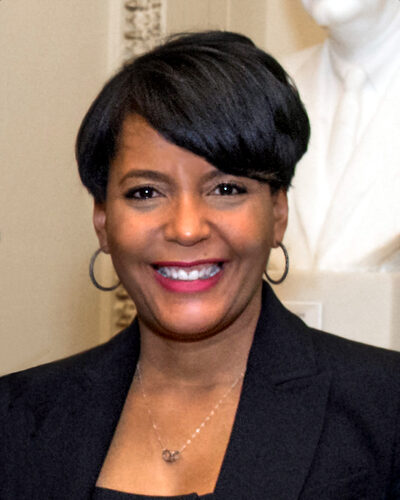
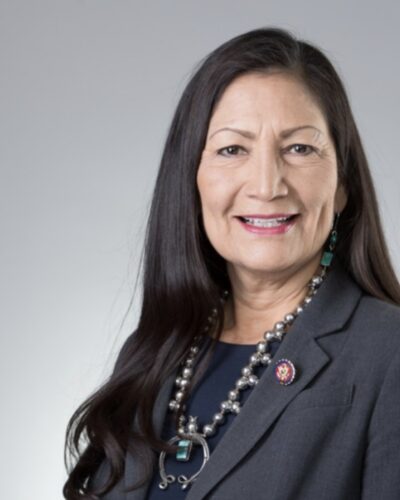
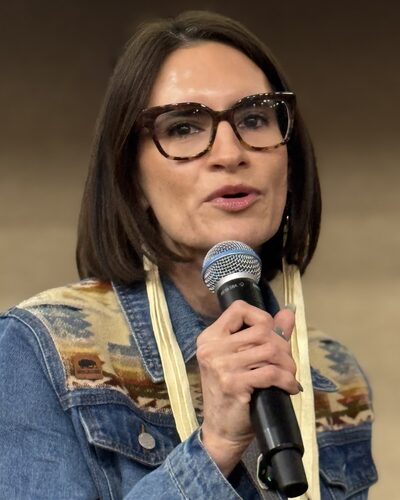

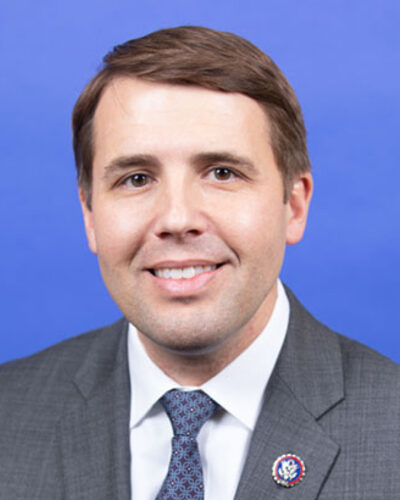
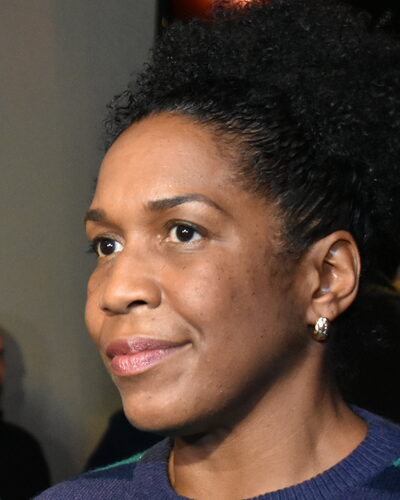
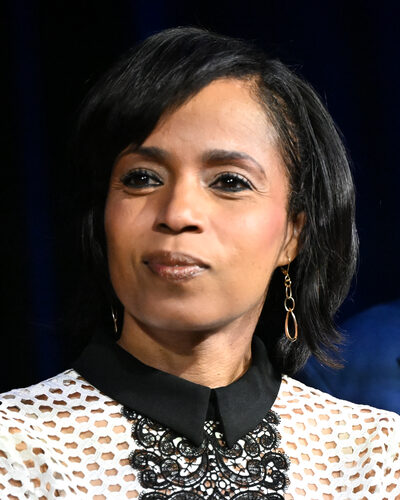
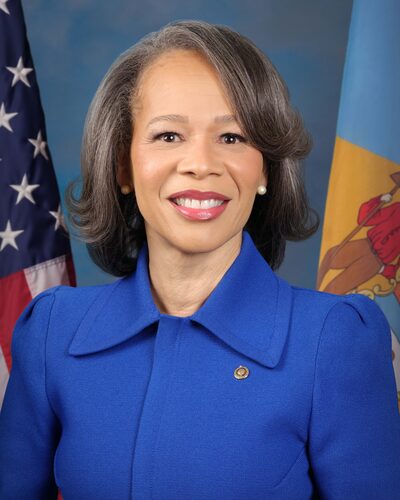
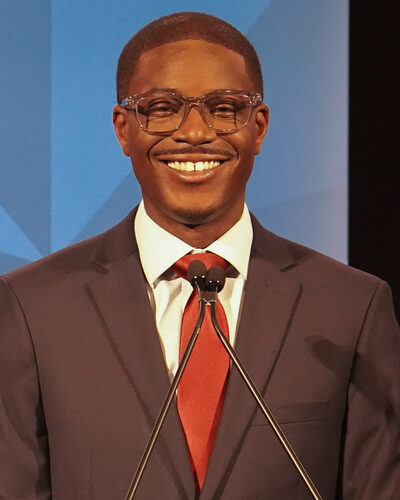
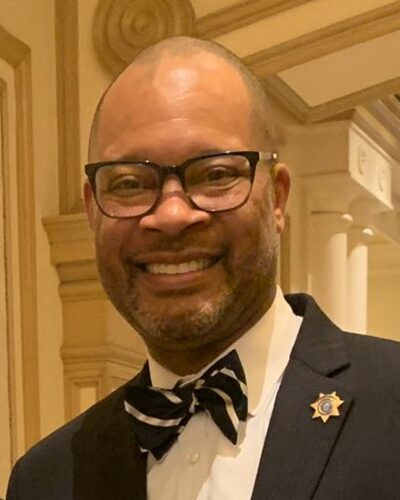
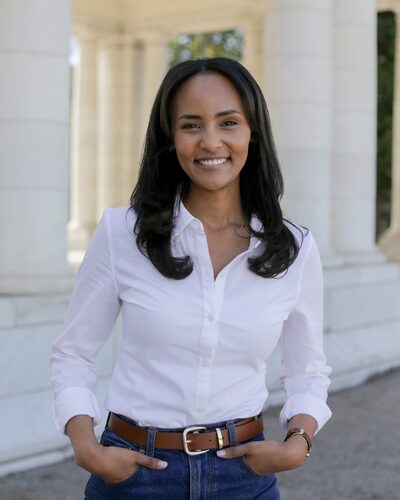
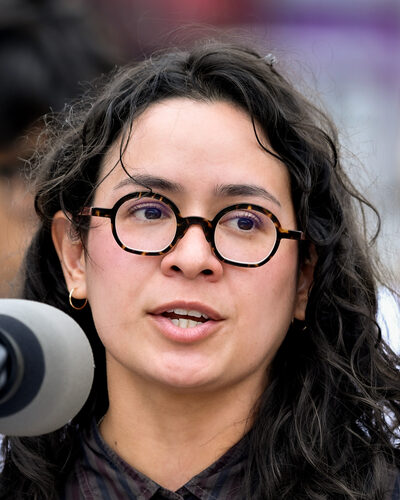
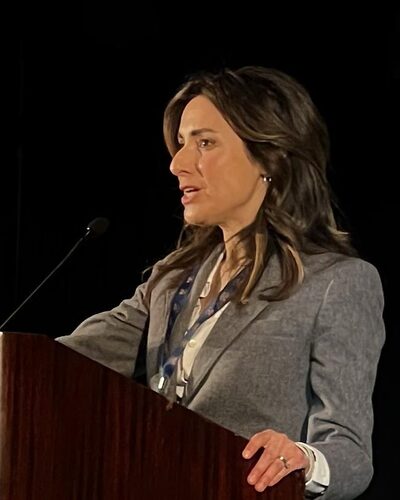
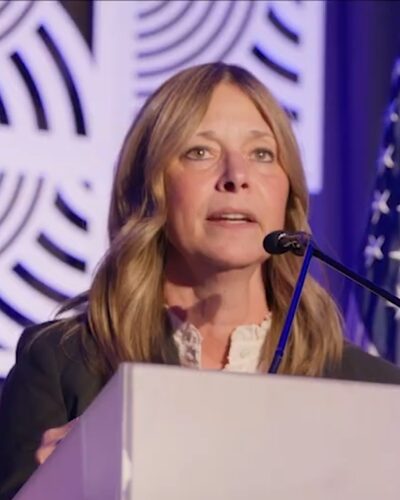
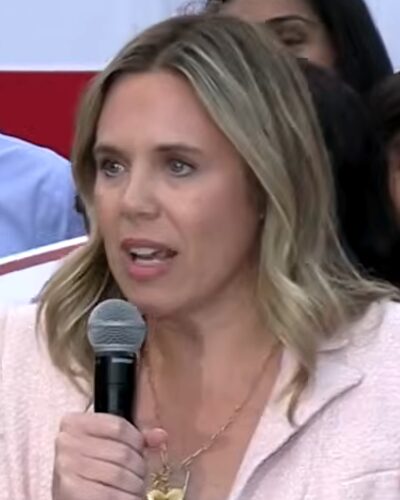
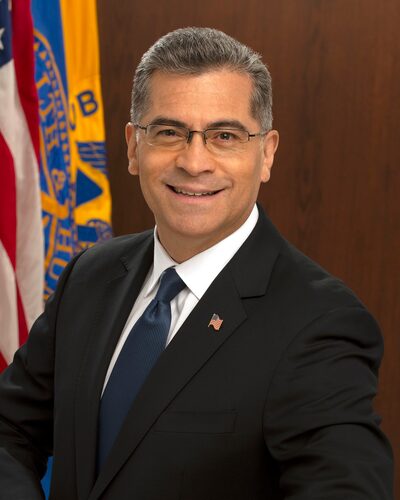
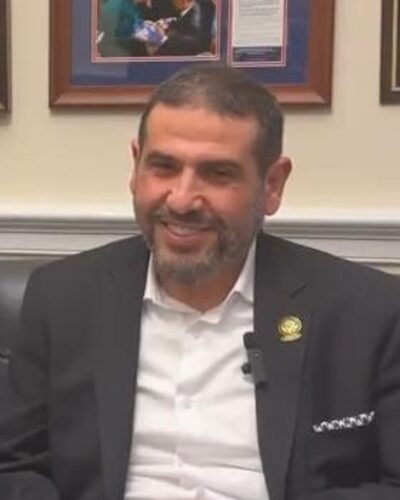
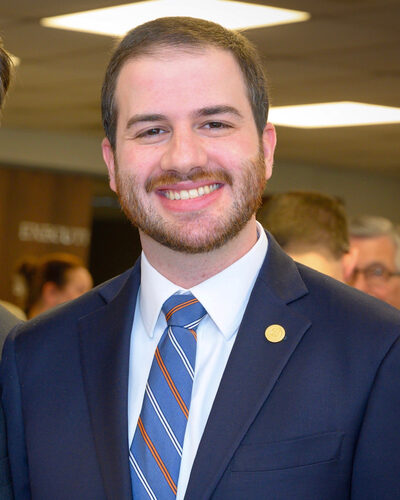
Every portrait on this page is in the public domain or openly licensed. Credits below.
And Hakeem Jeffries is positioned to become the first Black Speaker of the House.
Celebrate that. We are going to. Then we need to talk about what happened on Wednesday morning.
We have been promised a blue wave for most of a decade. It finally arrived, and it did not arrive because of the people on the ballot. It arrived because of the people in line.
Early voting set a midterm record. Roughly fifty-four million ballots, nine million more than 2022, according to the University of Florida Election Lab. Texas put up more than seven point seven million early votes and buried its 2018 high. Georgia certified more than two point eight million. Minnesota beat its own record by nearly two hundred thousand votes.
Ask those people why they came. The AP Voter Poll did, in all fifty states. About three-quarters said they were angry or dissatisfied with the way things are going. Roughly six in ten disapprove of how the president is handling the job. Two-thirds said he does not have the right priorities. About seventy percent want Congress to provide more checks and balances on the presidency.
So call it an affordability election. We are not going to argue with the woman who stood in that line over her grocery bill, and we are not going to tell her she meant something else. Six in ten voters told the AP those higher prices were the president's doing more than anything outside his control. The grocery bill was never a separate grievance from the rest of it. It was the one with a receipt.
And here are the numbers almost nobody read out loud on Wednesday. About six in ten voters disapprove of how ICE is handling its responsibilities. About six in ten say this administration's immigration enforcement has gone too far. Roughly seven in ten said immigration enforcement was a crucial or major factor in how they voted for Congress. About four in ten said it was crucial.
Four in ten. That is not a side issue and it is not the left's pet cause. It is one of the largest things on the ballot, and it is the thing the winners have said the least about since the polls closed.
The network exit polls put the rest more precisely. Black women voted 93 to 6 for Democratic House candidates. Black men went 86 to 12. Black voters overall, 90 to 9. Women overall split 59 to 40. And the AP's survey of some eighty thousand voters caught the movement. Only about three in ten voters under thirty backed a House Republican. Hispanic voters went from roughly four in ten backing Trump two years ago to about a third backing Republicans on Tuesday.
The same poll carried a caution that nobody on the winning side repeated. Only about half of voters hold a favorable view of the Democratic Party, and about two in ten who voted for Democratic candidates view the party unfavorably. Its edge on the issues is slim. Tuesday was not a hiring. It was a firing, and somebody happened to be standing nearby.
LaTosha Brown of Black Voters Matter said turnout in some states looked like 2008. She also said the organizations doing that work got less money this cycle than in 2022, and called this "the moment that is the greatest fight in my lifetime." The machine that built this wave was running on empty while it built it.
Here is the other thing on that ballot.
On January 7, an ICE agent named Jonathan Ross fired into a car on Portland Avenue in Minneapolis and killed Renée Good. She was thirty-seven, a United States citizen, a mother of three, a substitute teacher. She was also a poet. She enrolled at Old Dominion at twenty-eight, finished a degree in English and creative writing in 2020, and that year won the Academy of American Poets prize at her university for a poem called "On Learning to Dissect Fetal Pigs." She published it under the name Renée Nicole Macklin. DHS said the shooting was self-defense and that she had weaponized her vehicle. Kristi Noem called it an act of domestic terrorism. The president wrote on Truth Social that she ran over an officer who "seems to have shot her in self defense."
Governor Tim Walz watched the footage. "I've seen the video," he wrote. "Don't believe this propaganda machine." At a press conference he put it plainer. "We have someone dead in their car for no reason whatsoever." Mayor Jacob Frey called the self-defense claim bullshit. An independent autopsy her family commissioned later found a gunshot wound to her head.
Seventeen days later, federal agents killed Alex Pretti. Thirty-seven, a United States citizen, an intensive care nurse at the Minneapolis VA. Within three hours DHS said the agent had fired defensive shots, and Noem said Pretti came at officers with a pistol. Then the video came out. It shows him stepping in as agents sprayed a chemical agent into a woman's face. It shows him filming on his phone, both hands visible, before agents wrestled him to the ground. It shows an agent finding Pretti's gun in its holster and removing it.
What happened next has been reconstructed frame by frame by ABC News, NBC News and Bellingcat, with an audio forensics analysis out of Montana State. One shot. Three more in quick succession. Pretti collapses. Then six more fired into his motionless body. Ten in all. On a bystander's recording, officers standing over him can be heard shouting, "Where's the gun?"
He was a legal gun owner with a permit to carry and no criminal record, according to the Minneapolis police chief.
Neither Good nor Pretti was an immigration target.
On February 2, the Hennepin County Medical Examiner ruled Pretti's death a homicide. Cause of death, multiple gunshot wounds. Under how the injury occurred, Dr. Andrew Baker wrote, "Shot by law enforcement officer(s)." The same office ruled Renée Good's death a homicide as well. Homicide is a death at the hands of another person and it is not by itself a finding of crime. That is exactly the point. Determining whether a crime occurred is somebody's job. Nine months later, nobody has decided.
The two agents who fired on Pretti are on leave. ProPublica named them. The Justice Department opened a civil rights investigation in late January with the FBI in the lead, and nine months on it has produced no public findings and no charges.
The one official in America who can actually charge Jonathan Ross is Mary Moriarty, the Hennepin County Attorney. For most of this year the federal government would not give her the evidence. She and the state attorney general had to sue the Trump administration to get the body camera footage, the officers' statements, and the car Renée Good died in. The feds handed it over in July. Moriarty has already charged two other ICE agents over non-fatal incidents during the same operation, and she says she will decide on Good and Pretti before her term ends in December.
Alex Pretti's father stood at a press conference on October 27. "No one from the federal government called us on that horrible day," he said, "but they did go on TV to tell lies about Alex." He named the United States Attorney and said that office had stonewalled his family for nine months.
That is the narrow case. Here is the system around it.
As of late September, ABC News counted at least twenty-one people shot by federal immigration agents this term. Eight died. Three were citizens. Thirty-seven people died in ICE custody in fiscal year 2026 by Bloomberg Law's count, thirty-six by ICE's own, and either number is the deadliest year in the agency's history. At least sixty have died this term, against twenty-six across four years under Biden and forty-nine across the four years of the first Trump term, according to the Migration Policy Institute. This administration passed both in twenty-one months. The number of detention facilities went from 134 in January 2025 to 272 by July 2026, per the Government Accountability Office, holding close to seventy thousand people.
Human Rights Watch and Physicians for Human Rights reported in June, under the title "Dying in Detention," that the detention population had grown seventy-seven percent in a year while annual deaths more than tripled, producing what they measured as "a 138 percent increase in the annualized mortality rate per 10,000 detainees." They examined thirty-nine deaths. In all thirty-nine, they found the government had not released enough about the circumstances or the medical care to let anyone outside assess how the person died. At Camp East Montana, built on the Army's Fort Bliss, a leaked inspection report obtained by the Washington Post found sixty violations of federal detention standards in the facility's first fifty days. ICE's own Office of Detention Oversight went back in February and found forty-nine more, twenty-two of them involving use of force and restraints. It rated the facility acceptable.
On every piece of this, the shootings, the autopsies, the inspections, the death counts, the agency's first move has been to deny it.
On Tuesday, people in Minneapolis walked out of their polling places and stuck their "I Voted" stickers on the memorials for Renée Good and Alex Pretti.
That is what was on the ballot. The eggs and the coroner's report, on the same line, cast by the same hand.
So the gavel is back. What did the people holding it say first?
Jeffries went on Morning Joe. "The American people don't want us to get even," he said. "They want us to get things done on their behalf. Because life is way too expensive. We ran on affordability. We won on affordability. And now it's our job to govern on affordability." He said not one member of his caucus has brought impeachment to him.
To be fair to the man, he said more than that. He committed Oversight to "follow the facts, apply the law, be guided by the Constitution, let the chips fall where they may, and make sure that wrongdoers are being held accountable." Good. Hold him to the last clause. Because oversight that stops short of a referral produces a report, and a report is the thing ICE survives. Thirty-seven deaths in a year happened while reports were being written.
Kamala Harris got there a week early. On October 27, on The Parnas Perspective, she said "I think that going in the direction of impeachment is not a good idea." Limited resources. No sixty-seven votes in the Senate. Choose your battles.
And in September, Al Green forced articles of impeachment onto the floor. His letter to colleagues said the resolution was about justice for four people. The first two names on it were Renée Good and Alex Pretti.
The motion to set it aside carried 232 to 147. One hundred forty-seven members voted to advance it anyway, nearly all of them Democrats. Forty-six Democrats were recorded as present, and leadership had announced the day before that present is what they would vote. Among the forty-six were Jeffries, Whip Katherine Clark and Caucus Chair Pete Aguilar. The only Republican who voted present was Thomas Massie.
Not yes. Not no. Present. On a resolution that carried Renée Good's name.
Jeffries said at the time that "none of the serious work" had been done. Consider what he was standing against. In June of 2025, a hundred and twenty-eight House Democrats voted to block Green. By December it was twenty-three. In September it was eighteen. His caucus had been moving away from him for fifteen months. And seven weeks after a hundred and forty-seven members put it on a roll call, he went on television and said not one of them had talked to him about impeachment.
Their statement that day called impeachment "a sacred constitutional vehicle designed to hold a corrupt executive accountable for abuse of power." We are going to quote the rest of it, because the rest of it is the whole argument. The effort, they wrote, "traditionally requires a comprehensive investigative process, the collection and review of thousands of documents, an exacting scrutiny of the facts, the examination of dozens of key witnesses, Congressional hearings, sustained public organizing and the marshaling of the forces of democracy to build a broad national consensus." "None of that serious work has been done," they wrote, "with the Republican majority focused solely on rubber stamping Donald Trump's extreme agenda."
Read the back half of that sentence again. Their stated reason for standing down was that Republicans ran the committees. Thousands of documents, dozens of witnesses, hearings, a national consensus. Every item on that list required a gavel they did not have.
On Tuesday the voters handed them the gavels. Subpoena power. Both chambers. Seventy percent of the electorate asking for checks on this president. Leadership named its own precondition and the voters satisfied it. The excuse expired at eleven o'clock Tuesday night.
Present is what an ally votes. An ally is sympathetic. An ally releases the statement, calls the vehicle sacred, and declines to drive it. An accomplice spends something. An accomplice takes the loss on the floor and makes the other side put their name on the roll call. An ally protects the message. An accomplice protects the people who delivered it.
We are not asking for revenge. Calling it revenge is the tell. Revenge is personal and this is not personal. This is a country asking whether the men who killed its citizens will ever answer in a room, under oath, with a stenographer present. If the answer is no, then the only permanent account of this term will be the one ICE wrote about itself.
And this is not theoretical, which is the part nobody is saying out loud. In September, Thomas Massie, a Republican, filed eight articles of impeachment against Pete Hegseth. They cover launching hostilities against Iran without Congress, failure to protect civilians, and the extrajudicial killing of men on boats in international waters. He filed them as privileged, which forces a vote. Mike Johnson sent the House home early instead. Massie and House Democrats said the timing was meant to dodge it. Johnson called the whole thing a publicity stunt. The House comes back Monday and Massie says he will force the vote in week one.
Nobody has to investigate anything first. The articles are written, the extrajudicial killing counts are already in them, and a Republican wrote them. And the country is already there. Six in ten voters told the AP the military action against Iran was the wrong decision. A third called that war a crucial factor in how they voted.
A Republican who will not be here in February. On May 19, Massie lost his primary to a Trump-endorsed challenger in the most expensive House primary ever run, thirty-two point six million dollars in advertising. Three political action committees tied to pro-Israel donors spent more than fifteen and a half million of that against him. AIPAC's super PAC called him the most anti-Israel Republican in the House. He had voted against aid to Israel, and now he has six weeks left.
That is what the money does. Nobody has to prove a motive. You can just read the receipts and count who is still in the building.
There is a roll call coming. Watch who votes present.
Which brings us to the Speaker, and we would rather say this now than pretend later.
In August, in Michigan's 13th, a state representative named Donavan McKinney primaried Shri Thanedar. McKinney's platform said he would end the military aid and arms the United States gives to Israel. Thanedar was backed by AIPAC. He was also backed by Hakeem Jeffries. McKinney won by about four thousand two hundred votes, and on Tuesday he won the seat, returning Detroit to Black representation in Congress for the first time since 2022.
That is not a dollar figure. That is a choice. The man about to hold the gavel put his own weight behind the AIPAC-funded incumbent and against the Black candidate running on Gaza, in one of the Blackest districts in America, and the district picked the other guy.
The money is on the record too. In 2022 Jeffries raised four hundred forty thousand dollars from Israel-advocacy groups, the sixth-highest total in Congress that cycle, according to OpenSecrets. He has taken AIPAC-sponsored trips to Israel repeatedly since reaching Congress in 2013 and led a Democratic delegation on one in August of 2023.
Then there is May 20 of this year, and we are going to report this one carefully, because it has been reported badly by people on our side of the argument. A single donor routed two earmarked payments through AIPAC's political action committee, eighty-seven thousand five hundred dollars and sixty-one thousand eight hundred, to a joint fundraising committee called the Jeffries Battleground Protection Fund. One hundred forty-nine thousand three hundred dollars in one day. Sludge, which covers money in politics, reported it was the largest earmarked disbursement in the history of AIPAC's PAC.
Here is the part that usually gets left off. That fund is not Jeffries' campaign account. It splits what it raises between his campaign, the DCCC, and more than a dozen frontline House Democrats. So nobody wrote Hakeem Jeffries a hundred-and-fifty-thousand-dollar check. The accurate sentence is that the largest earmark in the history of AIPAC's PAC was aimed at the committee protecting House Democrats' most vulnerable seats, and his name is on the door.
That is a smaller fact. We would rather have the smaller fact.
Weeks later, Thomas Massie moved to cut three point three billion dollars in military aid to Israel. Jeffries wrote his colleagues opposing it, calling the amendment overly broad and warning it would restrict humanitarian aid, refugee resettlement, peacebuilding and embassy operations. On July 15 he voted no and the amendment failed, 314 to 104.
Look at who voted yes. Nancy Pelosi voted yes. Katherine Clark, his own Whip, voted yes and said the status quo is not tenable. One hundred three Democrats voted yes against ninety-eight who did not, which means a majority of the House Democrats who cast a vote that day went the other way from their leader. AIPAC put out a statement afterward thanking the three hundred fourteen and expressing disappointment in the hundred and three.
We are not going to tell you the money bought the vote. We cannot prove that and we will not pretend otherwise. Jeffries has held this position for his entire career in public life, including years when nobody was paying him for it, and a position a man held in 2013 was not purchased in 2026. That is the honest version and we will say it.
The problem was never his motive. The problem is arithmetic.
A New York Times and Siena poll of fifteen hundred seven registered voters in May found seventy-four percent of Democratic-aligned voters opposed additional economic and military support for Israel. Twenty percent were in favor. Three years earlier, opposition sat at forty-five percent. Sixty percent said they sympathize more with Palestinians against fifteen percent for Israel, and among voters under forty-five only seven percent sided with Israel. Forty-eight percent said their own party is too supportive of it.
Pew found in March that six in ten Americans now hold an unfavorable view of Israel, up nearly twenty points since 2022. Among Black Protestants, only thirty-three percent still hold a favorable view of Israel.
And when the Carnegie Endowment surveyed Black Americans directly in March of 2024, sixty-eight percent wanted the United States to call for an immediate and permanent ceasefire. Fifty-nine percent said American military aid should be conditioned on whether Israel uses our weapons consistent with human rights. Among Black Americans under thirty it was sixty-four percent.
And this is not a left-wing complaint, whatever anyone tells you this week. Pelosi is not a flank. The Democratic Whip is not a flank. Half the room voted the other way from him in July. The problem is that a man who holds a position fifteen percent of his own voters share is about to decide what reaches the floor, and he was carried there by the most pro-Palestinian electorate this party has ever assembled.
That is a representation problem. It does not require anybody's motive to be corrupt. It only requires the math to stay exactly where it is.
Here is where the leverage actually sits, and it is not with us.
Five democratic socialists won House seats on Tuesday. Donavan McKinney in Michigan. Claire Valdez and Darializa Avila Chevalier in New York. Chris Rabb in Pennsylvania. And Melat Kiros in Colorado, who is twenty-nine, who primaried Diana DeGette on June 30 and beat a fifteen-term incumbent by more than thirteen points, who is the first Black woman Colorado has ever sent to Washington and the first Gen Z woman elected to the body. DeGette first went to Congress in 1997, the year Kiros was born.
Not one of them has committed to voting for Hakeem Jeffries for Speaker.
Avila Chevalier told Vanity Fair in September she would need commitments before she put her name on it. Kiros, for her part, told CBS News, "I'm not convinced that there is a path forward for impeaching the president that would lead to removal. And if we don't have a hope for removal, I think our time would be better spent focusing on legislation that we could actually pass that could support working families in this moment."
She is right about the Senate math. There are not sixty-seven votes and there were never going to be. We will concede that to her and we would rather have her in the room than almost anyone.
But read her sentence again. The whole thing turns on if we don't have a hope for removal, as though removal were the only thing an impeachment produces. It is not. The product is the record. Subpoenas produce documents. Hearings produce sworn testimony. Referrals produce prosecutors. A failed Senate vote still produces a transcript that outlives everyone in the room. One medical examiner's office in Minnesota has already written the word homicide twice. What is missing is not evidence. What is missing is somebody willing to spend a vote on it.
The Speaker election happens at the start of the new Congress in January, and Jeffries is going to win it. NBC projects Democrats past two hundred fifty seats against the two hundred eighteen he needs. He could lose three dozen votes and still take the gavel. Nobody should pretend five freshmen can stop him, and nobody should want them to.
What they hold is narrower and worth more than that. A Speaker with a majority this size still decides what reaches the floor, and he will be deciding it inside a caucus that has already told him where it stands. One hundred three House Democrats voted to cut the three point three billion in July. The Whip was one of them. Pelosi was one of them. That is not a flank. That is half the room, and five more just walked in.
The price is not the gavel. The price is a committee referral with a date on it.
There is a model for this and it is not hypothetical. We watched it happen for two years.
Say whatever else you want about this administration. It was not timid. It did not wait for permission, it did not wait for consensus, and it never once treated a political norm as anything more than a suggestion. It moved on every front from the first week, and when it was told it was going too far, it understood correctly that a warning is not a law.
Look at what that bought them. On April 29 the Supreme Court narrowed Section 2 of the Voting Rights Act. Justice Kagan wrote in dissent that the majority had made "a nullity of Section 2" and threatened "a half-century's worth of gains in voting equality," and that the decision laid the groundwork for the largest reduction in minority representation since the era following Reconstruction. Fifty years of work. One term to put it on the floor.
We are not asking anyone to copy the cruelty. We are pointing at the intent. This administration showed the country what a government looks like when it actually means to do the thing it ran on, and it did that while every reasonable person in Washington explained in calm tones why none of it was possible.
So nobody gets to tell us it cannot be done. It was done. It was done to us, in twenty-four months, by people who were told constantly that they were overreaching and who understood that being told so costs nothing.
The majority sworn in come January holds the same tools and one thing this administration never had, which is a mandate. Seventy percent of voters asked for checks on this president. What is missing is not the arithmetic. It is not the precedent. The precedent was set in front of us, at our expense, and we are the ones who had to live in it.
What is missing is the will.
And we want to be exact about the standard, because it is not ours. They set it.
For twenty-one months this country has watched what a government does when the people running it believe they are actually allowed to govern. Not a better government. A faster one. They did not ask whether a thing was customary. They did not wait on a consensus, a working group, a bipartisan framework, or the approval of anybody's editorial board. When a norm was in the way they walked through it, and they were not embarrassed about it afterward.
Look at what that bought them.
The Voting Rights Act was passed in 1965. On April 29 of this year, in Louisiana v. Callais, the Supreme Court ruled six to three that Louisiana had unconstitutionally gerrymandered by race when it drew the second majority-Black district the federal courts had ordered it to draw. Justice Kagan, in dissent, wrote that the ruling "renders Section 2 all but a dead letter." And she wrote this: "I dissent, then, from this latest chapter in the majority's now-completed demolition of the Voting Rights Act."
Completed. A sitting Justice of the Supreme Court put that word in writing about a law older than hip hop.
Then read the rest of it back. Louisiana replaced a map containing two majority-Black districts with one containing a single district. Florida and Tennessee passed new maps behind it. In Alabama, a federal injunction came off the old one. Immigration detention facilities went from 134 to 272 in eighteen months. Thirty-seven people died in ICE custody in one year, the most in the history of the agency. And on September 10, the Census Bureau published a proposed rule whose text states that "no question about race, ethnicity, or sexual orientation shall appear on the short form decennial census questionnaire." That would be a first since the count began in 1790. The comment period closed Monday, the day before the election.
That is not two years of bad policy. That is six decades of other people's work being taken apart on a schedule, and it was not accomplished with superior arguments. It was accomplished by people who wanted it more than they wanted to be described as reasonable.
We are not going to pretend we did not watch it.
Because the lesson in it has nothing to do with them. The lesson is what turns out to be available in twenty-one months. Every single thing we have been told was too slow, too procedural, too hard to move through a committee, too dependent on sixty votes, too likely to look partisan, was sitting right there the whole time. It was available. It got used on us.
So this is the standard, and we would rather state it than be gracious about it. We are not accepting restraint from a party that was handed both chambers on Tuesday by the people with the most to lose. We are not accepting process as an answer. And we are not accepting the word pragmatic from anybody who watched the last twenty-one months and concluded that the problem is we are asking for too much.
They proved the speed exists. They used it on us.
Never again. And never again is not a feeling. It is a roll call.
The day before the election, Keisha Lance Bottoms walked into a Crawfordville cemetery full of unmarked graves and found one that was marked. It belonged to her great-great-grandmother, born in 1845, twenty years before emancipation. The same small Georgia town produced the vice president of the Confederacy. "So yes, Crawfordville produced the Confederacy's vice president," Bottoms said Tuesday night. "But tonight it also produced your next governor." Of her great-great-grandmother she said she did not know what dreams the woman had carried for the generations she would never meet. "But I know I am standing on shoulders made of steel."
Steel is the right word. Those shoulders did not carry this party back into power so it could be reasonable about people dying in custody.
The voters already did the hard part. They did it angry, underfunded, grieving, and with very little evidence that anyone in Washington would reward them for it. They were the accomplices. A wave a decade in the asking, delivered by the people with the least reason left to believe it would ever matter.
There is a roll call the week of November 9 and another one in January.
The bill is due, and it is not payable in press releases.
Photo credits
Portraits of members of Congress, the Cabinet and state officials are works of the United States government or of state governments and are in the public domain. The following are used under Creative Commons licences, via Wikimedia Commons:
- Peggy Flanagan · Travellers & Tinkers · CC BY-SA 4.0
- Juliana Stratton · Anxelli84 · CC BY-SA 4.0
- Angela Alsobrooks · Pat Siebert, Maryland GovPics · CC BY 2.0
- Abdul El-Sayed · Kenneth C. Zirkel · CC BY-SA 4.0
- David Crowley · WikiPortraits · CC BY-SA 4.0
- Melat Kiros · Andra Turner · CC BY-SA 4.0
- Claire Valdez · Metropolitan Transportation Authority · CC BY 4.0
- Annie Andrews · York County Democratic Party · CC BY 4.0
- Jeremy Moss · Anmanwell · CC BY-SA 4.0
- Gina Hinojosa · RRC1701 · CC0
- Amy Acton · Patricio101 · CC0